PARKWAY NUTRITION
BackLocated at 7920 Charlotte Dr SW in Huntsville, Parkway Nutrition was a beverage establishment that is now permanently closed. For those who may have frequented it or considered visiting, an examination of its business model and customer experience reveals a significant gap between common expectations for a nutrition-focused shop and the reality of its offerings. This disconnect may shed light on why its doors are now shut.
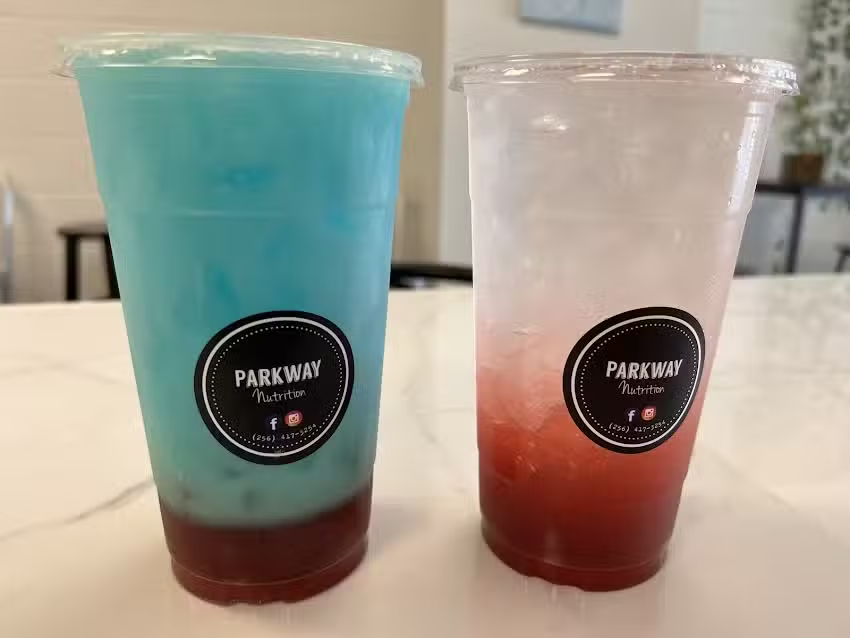
Unlike a traditional juice shop or smoothie bar that prides itself on using fresh fruits and vegetables, Parkway Nutrition operated on a different premise. Customer feedback indicates that the drinks, such as a strawberry lemonade, were prepared not from whole ingredients but from pre-packaged powders and mixes mixed with water. For anyone seeking genuinely nutrient-dense refreshment, this was an immediate point of contention. The expectation tied to a name like "Parkway Nutrition" is one of health and freshness, perhaps involving freshly squeezed juices or blended whole foods. The discovery that the products were, as one visitor described it, "lab made" from packets was off-putting and created a sense of dissonance with the branding.
The Business Model: A Closer Look
This powder-based approach is characteristic of storefronts known as "nutrition clubs," which are often operated by independent distributors for multi-level marketing companies like Herbalife. These establishments are positioned as community hubs for individuals focused on health goals, primarily weight management. The products served are typically meal replacement shakes and energy teas made from the company's line of dietary supplements. Legally, these are not classified as restaurants or cafes. Instead, when a customer makes a purchase, they are often technically buying a temporary "club membership" which includes a complimentary drink. This model explains several unusual aspects of the customer experience at places like Parkway Nutrition.
The pricing, for instance, often seems steep to the uninitiated. A single drink costing around $9, as reported by a patron of Parkway Nutrition, feels expensive for a beverage made from powder. However, within the club model, that price covers the product itself, the distributor's retail profit, and access to the community space and coaching. For the casual customer simply wanting a cold drink, this value proposition is not immediately obvious and can feel like a poor deal compared to a conventional health food store or café.
Atmosphere and Ambiance
Another point of criticism was the physical environment of the establishment. The interior was described as a vast, open room with a bar in the corner but notably lacking tables and chairs. This spartan setup is also consistent with the nutrition club model, which prioritizes the service counter and space for community events or fitness activities over creating a comfortable, lingering-friendly café atmosphere. For a customer hoping to sit and relax with their beverage, the space felt unwelcoming and utilitarian. It wasn't designed as a place to socialize in the traditional sense, but rather as a transactional point of service and a hub for existing members, which could feel alienating to newcomers.
Product, Price, and Perception
Despite the criticisms, the experience wasn't entirely negative for everyone. The strawberry lemonade drink itself was deemed "OK" and served its purpose as a cold, refreshing beverage for someone in need. It was seen as a "solid choice" for an unconventional, non-alcoholic drink option in an area where few existed. This suggests that for some, the novelty and function of the product could outweigh the concerns about its origin and cost. The business did receive a 4-star rating from this particular visitor, indicating a nuanced experience that was acceptable but not exceptional.
However, the core issue remained the mismatch of expectations. When customers seek out healthy smoothies or protein shakes, there is a growing expectation of transparency and natural ingredients. The modern consumer is often looking for visible signs of health: blenders filled with spinach and bananas, presses extracting juice from apples and carrots, and clear, understandable ingredient lists. An operation based on scooping powders from branded tubs into cups of water stands in stark contrast to this image. It raises questions about what "nutrition" truly means in this context—is it about whole-food-based wellness, or is it about formulated supplements?
- The Good: It offered a unique, non-alcoholic beverage alternative that was considered acceptable in a pinch. The establishment was also noted to have a wheelchair-accessible entrance.
- The Bad: The name "Nutrition" was perceived as misleading, as drinks were made from powders, not fresh ingredients. The price point was considered high for the nature of the product.
- The Ambiance: The interior lacked seating and a welcoming atmosphere, functioning more as a service counter than a place to gather, which could deter casual visitors.
A Concluded Venture
Ultimately, Parkway Nutrition represents a closed chapter in Huntsville's food and beverage scene. Its reliance on a specific and often misunderstood business model created a polarizing customer experience. While it may have appealed to a core group of members familiar with the products, it struggled to attract and retain casual customers whose expectations were shaped by the broader trends of the wellness industry. For a business to thrive, especially one with "Nutrition" in its name, aligning its product, environment, and price with consumer perception is critical. The story of Parkway Nutrition serves as a case study in the importance of that alignment, highlighting that even an "OK" product can fail to find a sustainable market if the overall experience doesn't match what the customer believes they are paying for.