Juice Shop
BackJuice Shop, a name that for years was synonymous with a certain type of sleek, health-conscious lifestyle in San Francisco, no longer operates its former location at 2 Trinity Place. While the doors are now permanently closed, an analysis of its operations, customer feedback, and overall brand identity provides a clear picture of a business that, for a time, captured the essence of the modern urban wellness movement. It positioned itself as more than just a place to get a drink; it was a purveyor of high-quality, meticulously crafted nutritional products, primarily focusing on the ever-popular cold-pressed juice.
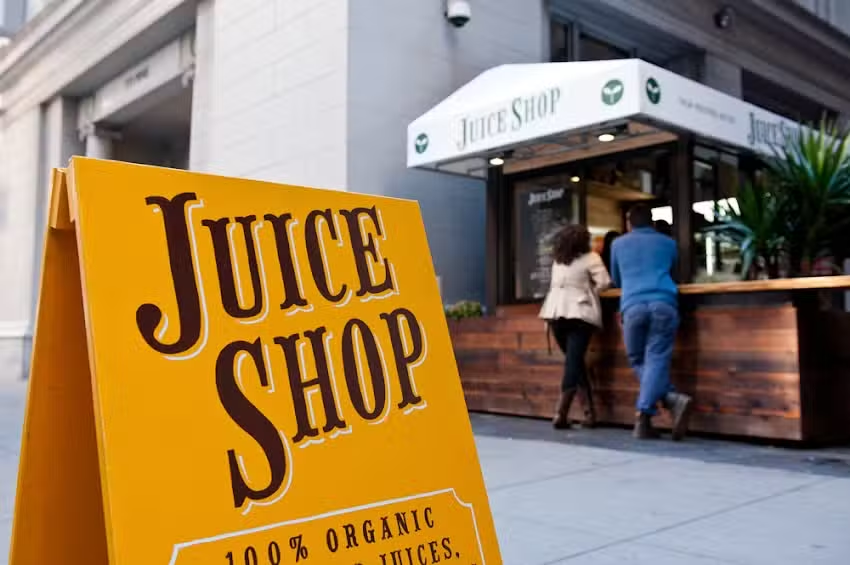
The establishment was part of a local chain that dotted several key neighborhoods, and its core philosophy was centered on providing nutrient-dense beverages in a convenient format. This particular location, tucked away in a narrow alley off Sutter Street, embodied a certain exclusivity. It wasn't a storefront that screamed for attention with flashy signs. Instead, it relied on a minimalist aesthetic and a word-of-mouth reputation, rewarding those who sought it out with what was described as a vibrant and nourishing experience. This 'hidden gem' quality could be seen as both a strategic advantage, creating a sense of discovery for customers, and a potential commercial drawback, limiting casual foot traffic in a competitive market.
The Core Product: A Commitment to Quality
The primary draw of Juice Shop was undoubtedly its product line. The menu was a testament to the benefits of raw juice, with a wide array of colorful options neatly arranged in glass bottles. The company heavily emphasized its use of organic ingredients and the cold-pressing method. This technique, which uses a hydraulic press to extract juice without generating heat from a traditional centrifugal blade, is believed by proponents to preserve more vitamins, minerals, and enzymes. For the target demographic of health-savvy consumers, this detail was not just a minor point but a crucial differentiator, justifying what was likely a premium price point.
The offerings extended beyond simple fruit and vegetable blends. The business was also known for its structured juice cleanse programs. These cleanses, designed for detoxification and nutritional resets, were a significant part of their business model, catering to clients looking for a more intensive wellness experience. The variety was also a key selling point. One former customer fondly recalled the encouragement to try samples, suggesting a business confident in its flavor profiles and eager to introduce patrons to new combinations they might not have considered otherwise.
- Variety: A wide range of colorful juices, from green vegetable blends to sweeter fruit concoctions.
- Specialty Items: Beyond standard juices, the availability of kombucha on tap was a forward-thinking feature, especially considering some reviews date back a decade when the fermented tea was just entering the mainstream.
- Eco-Friendly Approach: A notable and commendable aspect of their operation was a bottle return program. Customers could bring back the glass bottles for a credit, an initiative that promoted recycling and sustainability while also fostering customer loyalty.
The Customer Experience and Brand Aesthetic
Juice Shop cultivated a specific brand image that was reflected in its physical spaces. The description of the Trinity Place location as a "sleek space" aligns with photos of the interior, which show a clean, modern, and minimalist design. This aesthetic choice was intentional, creating an environment that felt more like a high-end boutique or a contemporary gallery than a traditional food and beverage counter. The focus was entirely on the product; the brightly colored juices provided the visual 'pop' against a neutral backdrop of wood, white walls, and stainless steel.
The few available online reviews, though dated, were unanimously positive, painting a picture of a business that delivered on its promises. Patrons praised the quality of the juices and the overall concept. The location, while hidden, was seen as "worth the small step into a narrow alley," reinforcing the idea that the quality of the product justified the effort of finding it. This positive sentiment, even from a small sample size, suggests that the business successfully connected with its intended audience and built a loyal, albeit perhaps niche, following.
Challenges and Eventual Closure
Despite the high-quality products and strong brand identity, the eventual permanent closure of not just this location but the entire Juice Shop chain speaks to significant underlying challenges. While the specific reasons for the shutdown are not detailed in the provided information, several factors common to the industry and the San Francisco market likely played a role. The market for fresh juice bars and healthy smoothies is intensely competitive. Numerous local and national brands compete for the same health-conscious consumer, making it difficult to maintain market share without constant innovation and aggressive marketing.
Furthermore, operating a business in San Francisco comes with notoriously high overheads, including rent and labor costs. A business model based on premium, organic ingredients and specialized processes like cold-pressing already carries thin profit margins. When combined with the city's high operational costs, financial viability can become a constant struggle. The reliance on a somewhat hidden location might have ultimately proven to be a greater liability than an asset, as businesses that depend more heavily on regular, high-volume traffic from nearby offices and shoppers may have had a competitive edge.
Potential Factors in its Demise:
- Market Saturation: An increasing number of competitors offering similar products, from organic juice to detox juice and wellness shots.
- High Operating Costs: The economic pressures of running a brick-and-mortar chain in one of the country's most expensive cities.
- Limited Menu Expansion: While excelling at juices, the business may have been perceived as too specialized compared to competitors that also offered a full range of food, salads, and smoothie bowls, capturing a broader customer base.
Juice Shop at 2 Trinity Place stands as a case study of a brand that did many things right. It offered a superior product, understood its target audience, and created a compelling, modern brand. It was a go-to spot for a potent cold-pressed juice or a comprehensive cleanse. However, the passion for quality and a curated customer experience could not ultimately overcome the harsh economic realities of the competitive food and beverage industry in San Francisco. For those who were its patrons, it is remembered as a quiet haven that offered colorful, soulful nourishment, a bright spot in the city's wellness landscape that has since faded.