Jamba
BackThe Jamba location at 1704 Oakland Rd, Ste. 200, in San Jose is now permanently closed. For a brand recognized nationally as a counter-serve chain for health-focused fruit smoothies and light bites, this specific establishment’s history is marked by a significant disconnect between the company's vibrant image and the on-the-ground customer experience. While Jamba as a whole aims to be a reliable destination for those seeking a nutritious and quick meal alternative, feedback from patrons of the Oakland Road branch reveals a pattern of operational issues that likely contributed to its eventual shutdown. The story of this former juice bar is a complex one, blending moments of satisfaction with significant and repeated instances of failure in service and quality control.
On the surface, this location offered the standard Jamba appeal. It was a place where customers could, in theory, get a consistently good product. One patron noted it was a "nice place for a quick juice" and that the beverage itself "tasted good." This sentiment reflects the core strength of the Jamba brand: a menu centered on flavorful and appealing fresh fruit smoothies and juices that cater to a health-conscious audience. The expectation when walking into any Jamba is to receive a product that is both delicious and made to a specific standard, whether it's a classic smoothie or one of their popular açaí bowls. For some customers, on some days, this location seemingly delivered on that basic promise, providing the refreshing and convenient experience they were looking for.
A Deep Dive into Service and Quality Failures
However, positive notes are overshadowed by a substantial volume of criticism pointing to deep-rooted problems. The feedback left by former customers paints a picture of an establishment struggling with fundamental aspects of food service, including hygiene, product consistency, order accuracy, and overall store maintenance. These were not isolated incidents but recurring themes that defined the location's reputation in its final years.
Critical Concerns Over Food Handling and Hygiene
Perhaps the most alarming feedback involves a serious breach of food safety standards. One customer, who had ordered an açaí bowl online and arrived early, witnessed an employee preparing their food without wearing gloves. The review explicitly states that the staff member handled all the food components with their bare hands and that the customer did not see them wash their hands beforehand. In the food service industry, and especially for a brand that promotes wellness and clean eating, this is a critical failure. Proper food handling is non-negotiable, and the lack of gloves when assembling ready-to-eat items like fruit and granola for an açaí bowl raises serious health concerns. This type of experience instantly shatters customer trust. The appeal of healthy drinks and bowls is predicated on the assumption that they are prepared in a clean, safe environment. A single instance of unhygienic practice can permanently deter a customer and, through word-of-mouth and online reviews, damage the location's reputation irreparably.
Inconsistent and Subpar Product Quality
Beyond hygiene, the inconsistency of the products served was another major point of contention. Regular patrons of a chain like Jamba have well-defined expectations. They order a specific menu item because they enjoy the taste and texture that the brand has standardized. This location frequently failed to meet that standard. A customer who loved Jamba in general expressed severe disappointment with this particular branch, stating it "serves inconsistent drinks." Their specific example involved ordering a smoothie with peanut butter and banana, only to receive a beverage where the peanut butter was seemingly forgotten entirely. The drink was so poorly made that they remarked, "Somehow, I could taste the ice in the drink?" This points to a failure in following recipes, improper blending techniques, or perhaps even issues with ingredient stocking. When a customer pays for a premium ingredient like peanut butter and doesn't receive it, it feels like a rip-off. When the resulting product is a watery, icy concoction, it completely undermines the purpose of visiting a specialty smoothie shop. This lack of quality control suggests poor staff training or a general lack of oversight from management.
Inaccurate Orders and a Neglected Environment
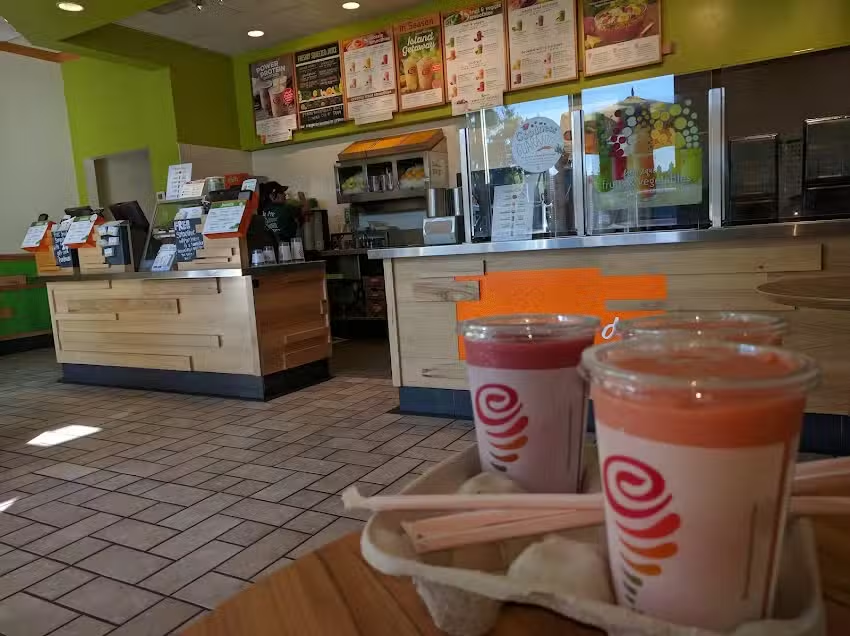
The operational chaos extended to the very basics of order fulfillment and store upkeep. Another review detailed an experience where the "place was messy and drink orders were incorrect." The customer ordered a large strawberry drink and a small berry drink but instead received a small strawberry drink and a large, unidentified orange beverage. This level of error is baffling and suggests a chaotic work environment where attention to detail is completely absent. It leaves customers frustrated, with the wrong items and the wrong sizes, after having already paid. This issue was compounded by the store's physical state. The same reviewer noted the messiness, while another patron, despite enjoying their juice, commented that the "environment is very old for sure" and that the "server looked tired though." These observations, taken together, depict a location in decline. A tired-looking staff, a messy interior, and consistently incorrect orders are all symptoms of a poorly managed establishment, one that was likely understaffed, undertrained, or suffering from low morale. The physical environment and the attitude of the staff are integral to the customer experience, and in this case, both were severely lacking.
A Track Record of Disappointment
While many of the most critical reviews are recent, evidence suggests that this location had issues with meeting customer expectations for years. A review from eight years prior recounted a frustrating visit during a promotion for free "Warriors" smoothies. The customer arrived well within the promotional hours, only to be told the store had already run out. While running out of a promotional item can happen, it points to poor planning and contributes to customer disappointment. Although an older complaint, it aligns with the more recent feedback, forming a long-term pattern of this location failing to deliver on its promises, whether it's a special offer or just a correctly made menu item.
The Inevitable Outcome
Ultimately, the permanent closure of the Jamba at 1704 Oakland Road is not surprising. The accumulated weight of negative customer experiences created a reputation that was impossible to overcome. A successful juice shop relies on trust, consistency, and a pleasant atmosphere. This location failed on all three counts. The repeated issues with hygiene, product quality, order accuracy, and the store's environment demonstrated a fundamental inability to operate at the standard expected of the Jamba brand. For residents of San Jose looking for fresh juices or a reliable smoothie, this establishment is no longer an option, and its history serves as a clear example of how critical operational excellence is to survival in the competitive food service landscape.