Honey Juice
BackHoney Juice, formerly located at 821 N Lamb Blvd in Las Vegas, presents a compelling story of a local business that, for a time, successfully captured the loyalty of its patrons through quality products and personal service, yet ultimately succumbed to operational challenges. The establishment is now permanently closed, a fact that stands as the final word on its history. An examination of its past performance, based on customer feedback and available records, reveals a business that excelled in its core offerings but faltered in the fundamental requirement of consistency, offering valuable insights for both consumers and entrepreneurs.
The Core of a Beloved Local Spot
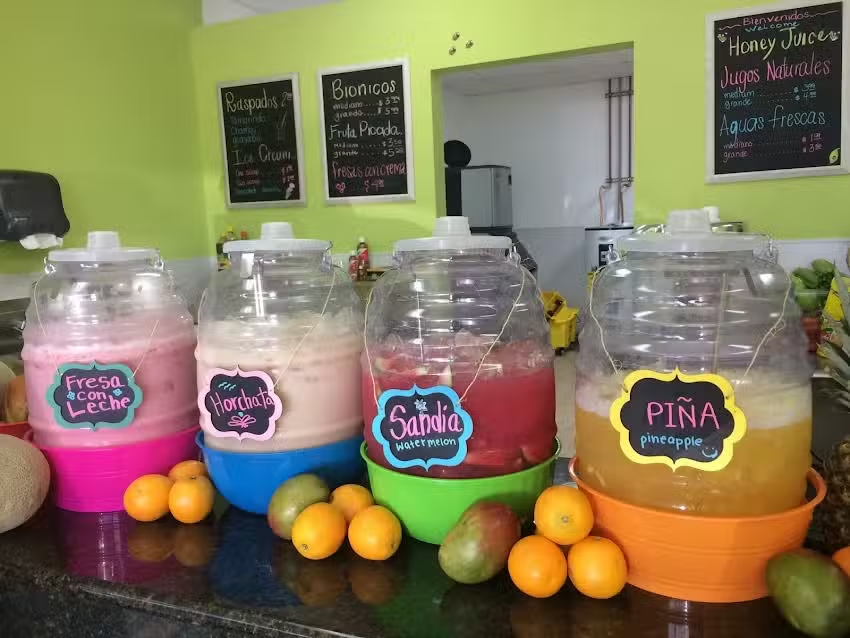
By all accounts from those who frequented it, Honey Juice delivered on its primary promise: providing fresh, delicious, and satisfying beverages. Customers consistently praised the quality of the drinks, whether it was a morning juice to start the day or a refreshing shake as a midday treat. The sentiment that the products "hit the spot" was a common refrain, indicating that the recipes and ingredients were well-chosen and expertly prepared. This establishment was a classic example of a fresh juice bar that understood its audience's desire for healthy, convenient options. The menu was a significant draw, with patrons highlighting the "many choices to choose from." This variety was crucial, as it catered to a wide range of tastes and dietary needs, from those seeking a simple fruit blend to others wanting more complex vegetable juices or restorative protein shakes.
The positive experience was not limited to the menu. The service at Honey Juice was another cornerstone of its appeal. Reviews frequently mention the staff as being "friendly," "nice," and "accommodating." This level of positive interaction suggests a welcoming environment where customers felt valued. Furthermore, the service was consistently described as "fast," a critical attribute for a business catering to people on the go. One customer noted it was their "go to place when I’m running errands and didn’t have time to make my morning juice." This illustrates the role Honey Juice played in the daily routines of its community—a reliable source for a quick, nutritious fix. This combination of a quality product and personable, efficient service is often the recipe for success in the competitive food and beverage industry.
What Customers Valued Most
- Product Quality: The juices and shakes were consistently described as "yummy" and well-made, forming the foundation of the business's positive reputation.
- Speed of Service: For customers with busy schedules, the fast service was a major advantage, making it a convenient stop.
- Friendly Staff: The personable and accommodating nature of the employees created a pleasant atmosphere that encouraged repeat business.
- Menu Variety: A wide selection of healthy smoothies and natural fruit juices ensured that there was something for everyone, catering to different preferences and health goals.
Signs of Instability and Eventual Closure
Despite the praise for its products and staff, a critical flaw existed within Honey Juice's operations: unreliability. The most damaging feedback a small business can receive often pertains to its accessibility, and in this area, Honey Juice evidently struggled. The most pointed piece of negative feedback comes from a potential customer who drove for 15 minutes, specifically intending to patronize the establishment, only to find it unexpectedly closed. This single experience encapsulates the frustration that can undo all the goodwill built by a good product. For a local smoothie shop that relies on neighborhood traffic and routine visits, being unpredictably closed during stated business hours is a significant breach of trust with its customer base.
This was not likely an isolated incident but rather a symptom of deeper issues that eventually led to the business being marked as "permanently closed." While the specific reasons for its closure are not publicly documented, the pattern of inconsistent hours often points to staffing problems, supply chain disruptions, or financial strain—common hurdles for small, independent operators. When customers can no longer depend on a business to be open, their loyalty quickly erodes. They will find alternatives, and it becomes increasingly difficult to win them back. The finality of its permanent closure suggests these operational hurdles became insurmountable. The story of Honey Juice serves as a stark reminder that operational consistency is as vital to a business's health as the quality of its offerings. The best juice in the world is worthless if the doors are locked when the customer arrives.
Factors Contributing to a Negative Perception
- Inconsistent Hours: The primary complaint from dissatisfied visitors was arriving during what should have been open hours to find the shop closed, causing significant frustration.
- Lack of Communication: There was no indication of any communication to customers regarding the erratic schedule, amplifying the negative experience.
- Erosion of Trust: For a business that positioned itself as a convenient, go-to spot, this unreliability directly contradicted its value proposition.
A Conclusive Look at a Closed Chapter
In retrospect, Honey Juice was a business with a strong, well-liked concept. It successfully created a product line of healthy smoothies and juices that resonated with its local market. The friendly and fast service created a loyal following among those who were able to patronize it during its functional periods. However, the business's inability to maintain a reliable and consistent operational schedule proved to be its fatal flaw. The frustration of its customers, as evidenced by reviews, highlights the paramount importance of dependability in the service industry. While former patrons may remember the taste of their favorite shake, the lasting impression is one of a business that, for reasons unknown, simply stopped being there for them, culminating in a permanent end to its operations.