Frujuice
BackFrujuice, once located at 2855 Stevens Creek Blvd in San Jose, is now permanently closed, leaving behind a mixed legacy documented in a small but telling collection of customer experiences. This establishment ventured into the competitive market of fresh beverages and casual food, aiming to blend traditional Mexican snack culture with the popular concept of a modern juice bar. While it is no longer an option for consumers, an examination of its past operations offers valuable insight into the factors that can make or break such a business, from standout products to critical operational failures.
Based on customer feedback, Frujuice was a place of stark contrasts. On one hand, it had the ability to create truly memorable and delicious items that garnered loyal fans. On the other, it was plagued by inconsistencies that ultimately soured the experience for many. The story of Frujuice is a lesson in how a promising concept can falter without a strong foundation of consistency, cleanliness, and customer service.
The Bright Spots: Unique Flavors and Satisfying Meals
When Frujuice was at its best, it delivered unique and vibrant flavors that were hard to find elsewhere. The most frequently praised item was the Mangonada, a classic Mexican frozen beverage. For the uninitiated, a Mangonada is a brilliant concoction of sweet, tangy, spicy, and savory flavors. It typically blends ripe mango with lime juice, chamoy sauce (a salty, sweet, and sour condiment made from pickled fruit), and a sprinkle of chili-lime salt like Tajín. One customer who had first tried it in Los Angeles was thrilled to find it at Frujuice, describing their version as perfectly tangy and spicy. This same patron highlighted a moment of excellent customer service, noting that a friendly employee allowed them to sample various juices before making a choice and even added extra mangoes and chamoy to their Mangonada at no additional cost. This single positive interaction demonstrates the potential Frujuice had to build a strong, positive reputation.
Beyond its specialized drinks, Frujuice also offered a menu of savory food that received positive marks. A reviewer mentioned enjoying the tacos, quesadillas, and Carne Asada Fries, specifically praising them for being well-seasoned and served in perfect portions—not too much and not too little. This suggests that the kitchen had a solid grasp on preparing satisfying, flavorful meals that complemented its beverage offerings. For a smoothie shop to also excel at savory food is a significant advantage, as it broadens its appeal to a wider range of customers looking for either a light refreshment or a full meal.
Spotlight on the Menu: Mangonadas and Bionicos
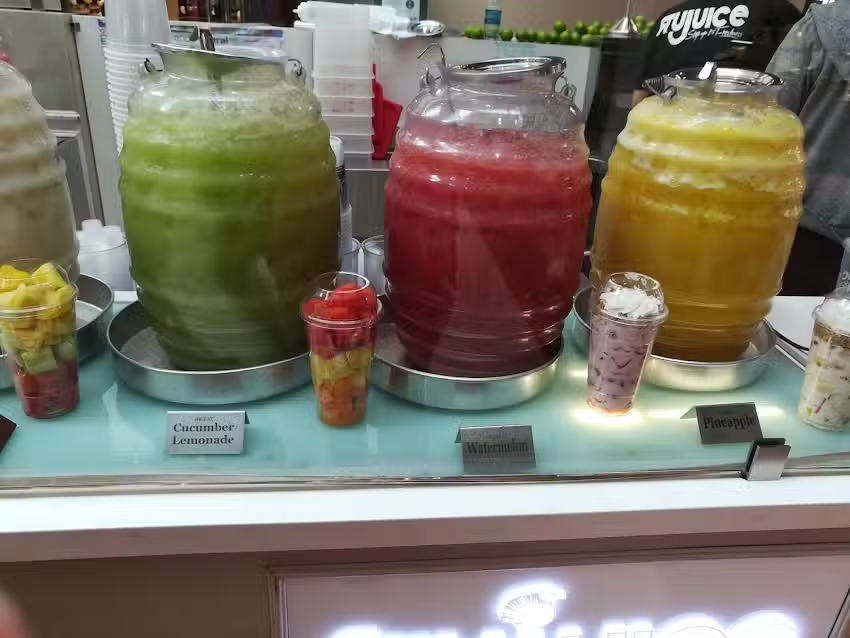
To understand what Frujuice aimed to offer, it's helpful to look closer at two of its key menu items.
- Mangonada: As mentioned, this drink was a star attraction. Its complexity is what makes it so appealing. The sweet mango puree provides a tropical base, the lime juice adds a sharp, acidic cut, the chamoy introduces a salty and sour depth, and the chili powder delivers a final, lingering kick of heat. It's a multi-layered experience and a staple at Mexican ice cream shops and street vendor stalls. When made well, it's incredibly refreshing and addictive.
- Bionico: This was another specialty item, though one that proved problematic for Frujuice. A Bionico is a fruit salad that originated in Guadalajara, Mexico. It consists of a medley of chopped fresh fruits—such as papaya, strawberries, cantaloupe, and banana—drenched in a special sweet cream sauce called "crema." The dish is then typically finished with toppings like granola, shredded coconut, and raisins. The crema is the key element, often made from a blend of Mexican crema or sour cream, condensed milk, and sometimes a hint of vanilla or even coffee. It was intended to be a healthy, energy-boosting meal, and its unavailability at Frujuice was a source of significant customer frustration.
The Downfall: A Pattern of Inconsistency and Neglect
Despite having products that could inspire five-star reviews, Frujuice ultimately failed to maintain the standards necessary for long-term success. The negative feedback points to systemic problems across several key areas of the business, which are common reasons why many food establishments, especially a juice bar, may struggle.
1. Inconsistent Customer Service
While one customer praised a wonderfully helpful employee, another had a polar opposite experience, describing the staff's attitude as "utterly disgusting." This level of variation is a major red flag. Good service can make up for a mediocre product, but bad service can ruin even the best food and drink. For a customer, not knowing whether they will be greeted with a smile or a sneer creates an unreliable and stressful environment, discouraging repeat visits. In the service industry, consistent and positive interaction is non-negotiable for building customer loyalty.
2. Unreliable Menu Availability
A significant point of frustration came from the Bionicos. One reviewer noted that on two separate occasions, they were unable to order this signature item because the shop had run out of the essential "crema." This is more than a minor inconvenience; it signals poor inventory management and a disregard for the customer experience. When a business advertises a specific menu, customers arrive with expectations. Failing to deliver on those expectations, especially for a specialty item, erodes trust and damages the brand's reputation. It suggests a chaotic behind-the-scenes operation, which can make customers question the quality of the entire menu.
3. High Prices and Low Value
Multiple customers pointed out the high prices at Frujuice. One called the establishment "extremely expensive," while another felt the drinks were "very average for the prices." This perception of poor value is incredibly damaging. Customers are often willing to pay a premium for exceptional quality, a unique experience, or outstanding service. However, when the product is merely average and the service is unreliable, high prices feel unjustified and exploitative. This combination likely drove away many potential repeat customers who felt their money was better spent elsewhere.
4. Cleanliness and Staffing Issues
Perhaps the most alarming criticism was the state of the establishment itself. A reviewer described the place as "always dirty, very dirty." For any business serving food or fresh fruit juice, cleanliness is paramount. A dirty environment is not only unappetizing but also a serious health concern. This comment, combined with the observation that the shop was often understaffed with only two employees during peak hours, paints a picture of a business in distress. Understaffing leads to slow service, stressed employees, and a decline in maintenance and cleaning, creating a vicious cycle of poor customer experience.
A Retrospective
The story of Frujuice is a cautionary tale. It shows that having a few great ideas or a standout product like a well-made Mangonada is not enough to sustain a business. Success in the food and beverage industry hinges on consistency in every aspect: the quality of the product, the friendliness of the service, the availability of the menu, the fairness of the price, and the cleanliness of the environment. The wildly different reviews of Frujuice indicate that a customer's visit was a roll of the dice—it could be a five-star experience or a one-star disaster.
While Frujuice is now permanently closed, its history serves as a clear illustration of the challenges faced by a small juice shop. It had the potential to be a beloved local spot for authentic Mexican treats and healthy smoothies, but it was ultimately undone by fundamental operational failures. For former patrons and curious onlookers alike, the memory of Frujuice is a reminder that excellence is not just about what you offer, but how reliably you offer it.