Boston BRICK Shakebar
BackLocated at 133 Federal Street in Boston's Financial District, the Boston BRICK Shakebar was conceived as a convenient nutritional hub, though it is now permanently closed. Its existence was intrinsically tied to the larger fitness center it was a part of, BRICK Boston, a luxury CrossFit gym that opened in the same location. This integration was its defining characteristic, shaping both its offerings and its target audience. The establishment was not a standalone juice bar but rather an amenity designed to complement an intense workout regimen, offering a quick and healthy solution for gym-goers right as they finished their training.
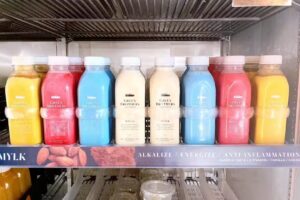
The primary appeal of the Shakebar was its strategic purpose. For members of the BRICK gym, it eliminated the need to travel for a post-workout shake. This convenience is a significant advantage in the fitness world, where timing nutrient intake can be a key part of a recovery strategy. The menu, though not widely archived, was centered around protein shakes and healthy smoothies, tailored to muscle recovery and energy replenishment. One could expect a lineup of beverages blending protein powders with fruits, vegetables, and other supplements, designed to be both functional and palatable. This focus on performance-oriented nutrition meant it catered to a very specific niche, differentiating it from more mainstream cafes that might focus on a broader range of casual food and drink options.
The Customer Experience: Pros and Niche Appeal
For its intended clientele—the fitness enthusiasts of BRICK Boston—the Shakebar presented several clear benefits. The most obvious was the seamless integration into their fitness routine. Finishing a high-intensity class and immediately grabbing a custom-blended shake offered a level of convenience that is hard to overstate. The staff, working within a high-end gym environment, were likely knowledgeable about the nutritional content of their products, able to guide patrons toward options that best suited their fitness goals, whether it was muscle gain, weight loss, or simple recovery.
While public reviews are exceptionally scarce, with a single 4-star rating and the comment "Good" representing the bulk of its digital footprint, this lack of feedback is itself revealing. It suggests the Shakebar operated more as an internal feature of the gym rather than a public-facing retail business. Its customers were the gym's members, a captive audience who may not have felt the need to post public reviews for what they considered part of their membership perks. Within this context, the positive rating, though singular, implies a level of satisfaction with the product and service. The gym itself garnered positive reviews for its facilities and staff, and it is reasonable to infer that the Shakebar maintained a similar standard of quality. The entire BRICK Boston facility was marketed as a luxury experience, with amenities including posh locker rooms, towel service, and physical therapy, positioning the "organic smoothie, juice and coffee bar" as another premium feature.
Downsides and Eventual Closure
Despite its clever concept, the Boston BRICK Shakebar ultimately failed to sustain itself. The most significant drawback was its limited audience. By primarily serving gym members, its potential customer base was inherently restricted. Unlike a typical smoothie shop on a busy street that can attract foot traffic from all demographics, the Shakebar's success was directly tied to the success and membership volume of the gym. This dependency is a high-risk business model. Any downturn in gym attendance or membership would immediately impact the Shakebar's revenue, without the possibility of compensating with sales from the general public.
Furthermore, the location at 133 Federal Street, while ideal for a gym targeting professionals in the Financial District, presented challenges. High operational costs, including rent, in such a prime area would have demanded consistent and high-volume sales. While busy on weekdays with the corporate crowd, the Financial District typically sees a significant drop in foot traffic during evenings and weekends. Although the gym had weekend hours, this broader neighborhood pattern could have created periods of slow business that were difficult to overcome for a niche amenity.
The intense competition within Boston's food and beverage market cannot be overlooked. The city has a dense concentration of cafes, eateries, and dedicated shops for fresh juice and smoothies. To survive, a business needs a strong unique selling proposition and a robust customer base. While the Shakebar's unique proposition was its convenience for gym members, this was not enough to ensure long-term viability once the gym itself ceased operations at that location. The "permanently closed" status indicates that the model, however appealing on paper, was not sustainable in practice.
A Look at the Potential Menu
While the official menu is lost to time, we can reconstruct its likely offerings based on its identity as a fitness-focused juice bar. The menu would have almost certainly been divided into distinct categories to meet various nutritional needs.
- Protein Shakes: The cornerstone of the menu. These would have featured whey, casein, or plant-based protein powders as a base. Popular combinations would likely have included classic flavors like chocolate and vanilla, blended with bananas, peanut butter, almond milk, and oats for a complete meal replacement shake.
- Healthy Smoothies: For those seeking a lighter option, fruit and vegetable smoothies would have been essential. Blends incorporating spinach, kale, berries, mango, and pineapple would offer a mix of vitamins and antioxidants. These drinks would appeal to both post-workout clients and those simply looking for a healthy snack.
- Fresh Juice: While perhaps less of a focus than shakes, offering cold-pressed juice would have broadened the appeal. Options might have included energizing blends with ginger and lemon, or detoxifying green juices with cucumber, celery, and apple.
The Shakebar was part of a facility that prided itself on being a luxury brand, so the use of high-quality, organic ingredients would have been a key selling point, as mentioned in early press releases about the gym. This commitment to quality, however, would have also resulted in higher price points, potentially further limiting its appeal to a clientele outside the premium gym membership base.
Final Analysis
The Boston BRICK Shakebar was a well-conceived amenity within a specific ecosystem—a luxury fitness center. It catered effectively to its target niche with convenient, performance-focused nutritional products like protein shakes and smoothies. Its main strength was its symbiotic relationship with the BRICK gym. However, this strength was also its fatal weakness. Its reliance on a single source of customers, the high costs of its prime location, and its inability to compete as a standalone retail entity in Boston's crowded market ultimately led to its closure. For former patrons, it was a valued convenience, but for the broader public, it remains a little-known establishment that highlights the challenges of operating a highly specialized food business.