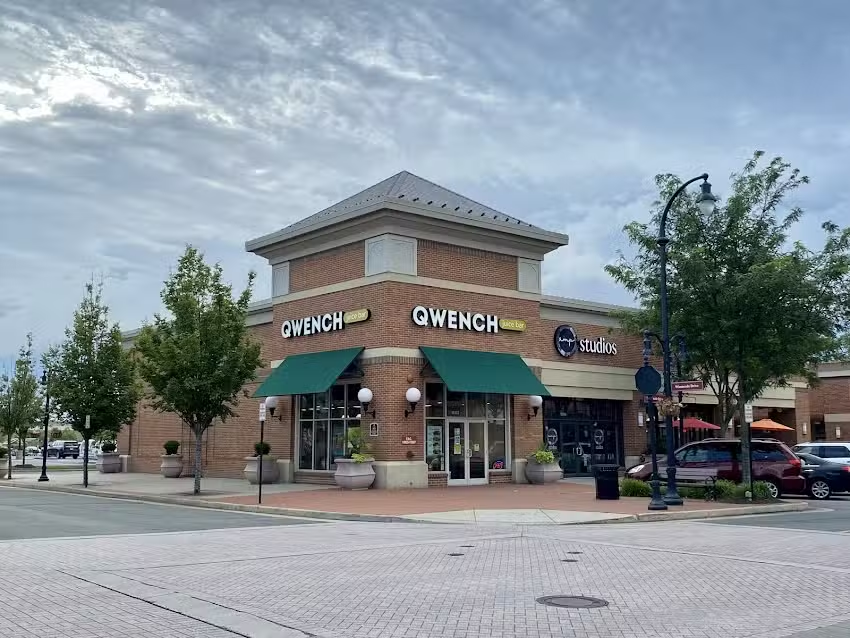
Qwench Juice Bar
BackFormerly a destination for those seeking healthful beverages and food on Promenade Drive, the Qwench Juice Bar in Leesburg is now permanently closed. This establishment, part of a larger franchise network, leaves behind a mixed and often contradictory legacy. While some customers found it to be a source of fresh, satisfying meals and drinks, a significant number of others experienced issues ranging from poor product quality to problematic customer service. An examination of its operations reveals a business that struggled with consistency, a critical element for success in the competitive health food market.
The brand promise of Qwench is centered on a clear philosophy: providing a perfect balance of genuine health and exceptional taste. The franchise prides itself on using fresh ingredients, offering raw squeezed juices made to order, and avoiding sugary fillers like frozen yogurt in its healthy smoothies, opting instead for bases like fresh Greek yogurt. A key part of their model is transparency, with an open layout allowing customers to see their orders being prepared from scratch. For a time, the Leesburg location seemed to deliver on this promise for some of its patrons.
Moments of Freshness and Quality
Positive experiences at the Leesburg Qwench often highlighted the very ideals the brand was built on. One customer, for instance, praised the friendly environment and the freshness of the ingredients, noting the value in watching their smoothie being made right before their eyes. This transparency built confidence and aligned perfectly with the expectations of a health-conscious consumer. Another patron found the avocado toast to be delicious and perfectly portioned for an afternoon snack, indicating that the kitchen was, at times, capable of producing appealing and well-executed food items.
The menu's variety, particularly the açaí bowls and juice blends, was another strong point for some. One highly positive review described the juices and açaí shakes as being "to die for," suggesting a high level of satisfaction with the core offerings. Furthermore, this customer pointed out a significant operational positive: the use of separate, peanut-free blenders. For individuals or families dealing with severe food allergies, this level of care and cross-contamination prevention is not just a convenience but a crucial safety measure. It’s a detail that can build immense customer loyalty and trust. The portion sizes were also noted as being generous, with some feeling they received enough for two meals, adding a layer of value to their purchase.
The Downside: A Pattern of Inconsistency
Despite these positive aspects, the Leesburg Qwench was plagued by a critical flaw: inconsistency. The customer experience could vary dramatically from one day to the next, and often depended entirely on who was working behind thecounter. This unreliability manifested in two major areas: product quality and customer service.
While the brand emphasizes freshness, numerous reports suggest this was not always the reality. One customer who enjoyed the avocado toast had a completely different experience with a carrot and orange juice, which they described as tasting old and lacking the natural sweetness expected from fresh produce. Another patron recounted receiving a watermelon smoothie that was bitter and unpleasant. These instances stand in stark contrast to the brand’s core mission and suggest significant issues with ingredient sourcing, storage, or rotation. The most frequently cited quality control issue appeared to be with the shop's açaí bowls. A repeat customer lodged complaints, both to the store and to corporate, about being served old bananas on multiple occasions. On another visit, their bowl was described as "soupy," a major disappointment for a dish that is supposed to be thick and frozen, almost like a sorbet. When a juice shop fails to deliver on the fundamental promise of fresh fruit, it erodes the very foundation of its business model.
Service and Pricing Concerns
The inconsistency extended to customer service. While some staff members were described as friendly and helpful, multiple reviews pointed to a specific employee who was consistently rude. This created a hit-or-miss atmosphere where a customer's visit could be pleasant one day and frustrating the next. One patron noted that service was generally good on weekends but poor when this particular individual was working, indicating a clear personnel issue that was not being adequately addressed by management.
Price was another significant point of contention. One customer expressed outrage over paying $11 for a small watermelon smoothie, a price point they felt was exorbitant, especially given the non-organic ingredients and the poor quality of the final product. The comparison was made to Starbucks, with the observation that even a global coffee giant offered better value for a treat. This sentiment highlights a crucial business challenge: if you charge premium prices, the product and experience must consistently be of premium quality. The perception that Qwench was pricing its items "through the roof" without delivering a commensurate level of quality or service was a damaging one. The experience was further soured for this customer when they witnessed their spilled drink simply being put back into the cup, a clear breach of basic food service standards.
A Franchise That Failed to Thrive
Ultimately, the permanent closure of the Qwench Juice Bar in Leesburg appears to be the result of its failure to build a stable, satisfied customer base. A 3.1-star average rating reflects a deeply polarized public opinion. While the establishment had the potential to be a go-to spot for healthy food options, its operational inconsistencies were too severe to overcome. The positive aspects, like its allergy-friendly practices and occasional high-quality offerings, were overshadowed by frequent lapses in product freshness and deeply negative service interactions.
This location's struggles were not unique within the region; other Qwench franchises in Northern Virginia also closed after relatively short operational periods, suggesting broader challenges for the brand in this market. For a franchise that aims to be a leader in the health food space, the inability to consistently deliver fresh ingredients and a positive customer experience proved fatal. The story of the Leesburg Qwench serves as a case study in how even a strong brand concept can fail when the execution at the local level is unreliable and falls short of customer expectations.