
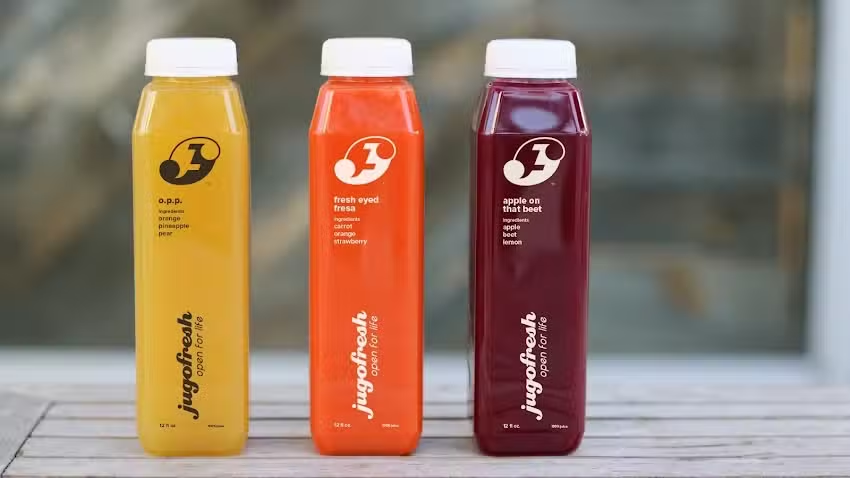
jugofresh whole foods market davie
BackFormerly operating from within the Whole Foods Market at 1903 S University Dr, the Jugofresh counter in Davie was part of a once-burgeoning Miami-based brand that aimed to bring healthy, organic options to the forefront. However, this location, along with all other Jugofresh outlets, is now permanently closed. This retrospective look examines the customer experience, the products offered, and the broader business context that defined this specific juice bar, offering insights for consumers interested in the competitive landscape of healthy eateries.
The primary appeal of the Jugofresh in Davie was its strategic placement. For health-conscious shoppers already frequenting Whole Foods, the convenience of grabbing a post-shopping fresh juice or a meal-replacement smoothie was a significant advantage. It created a seamless experience, merging the quest for organic groceries with immediate access to ready-made healthy refreshments. This store-within-a-store model was a core part of Jugofresh's later expansion strategy, as the company closed several standalone locations to focus on these partnerships. The Davie location was a direct result of this symbiotic vision, aiming to capture a dedicated and relevant customer base.
Product Quality and Customer Experience: A Mixed Bag
Based on the limited available customer feedback, the offerings at the Jugofresh in Davie garnered both praise and criticism, painting a picture of a business with clear strengths and notable weaknesses.
The Positives: Quality Ingredients and Friendly Service
Customers who enjoyed their experience often pointed to the quality of the products and the pleasant service. One long-term patron highlighted the helpful and personable staff, contributing to a clean and friendly environment. This kind of positive reinforcement is crucial for any smoothie shop, as the customer interaction is as much a part of the product as the ingredients themselves. The menu, which included items like açaí bowls, was also a draw. A reviewer noted that the bowls were "pretty good," suggesting that the core product met the expectations of consumers looking for a tasty and nutritious option. For a brand positioning itself in the premium health food market, delivering on flavor and using high-quality ingredients was a fundamental requirement, which, in some cases, they appeared to achieve successfully.
The Negatives: High Prices and Operational Failures
Despite the positives, significant issues detracted from the customer experience. A recurring theme was the price point. The same reviewer who praised the açaí bowls also described them as "pretty pricey." This is a common challenge for establishments that prioritize organic and high-quality ingredients, especially in the cold-pressed juice market. While many consumers are willing to pay a premium for health benefits, the price must be justified by a consistently excellent product and service, which was not always the case here.
A more damaging issue was operational inconsistency. One of the most critical reviews stemmed from a customer who drove out of their way only to find the store closed, despite its listed hours indicating it should have been open. The business was listed as closing at 10 PM, but was apparently closed by 8 PM. This type of error is more than a minor inconvenience; it erodes trust and severely damages a brand's reputation for reliability. For a customer to make a special trip, only to be met with a locked door, is a frustrating experience that often results in the permanent loss of their business. This incident points to potential management or communication failures within the Davie location.
The Broader Context: The Rise and Fall of Jugofresh
To fully understand the story of the Davie location, one must look at the trajectory of the Jugofresh brand itself. Founded in Miami in 2012, Jugofresh quickly became a local hotspot, expanding rapidly across South Florida. The brand was known for its trendy aesthetic, commitment to organic ingredients, and innovative menu of juices, smoothies, and bowls. The partnership with Whole Foods was initially seen as a major step forward, a move to streamline operations and tap into a larger, established customer base.
However, the rapid expansion proved to be unsustainable. In March 2018, founder Matthew Sherman announced the closure of all Jugofresh locations, including those within Whole Foods. In a candid letter, he cited his own "lack of experience and the rapid expansion" as the primary reasons for the company's demise. He acknowledged that while the original store had a certain "magic," it was not something that could be easily replicated or scaled without strong business acumen. The company faced immense challenges, including rising rents, increased competition in the organic juice bar space, and the difficulty of maintaining a distinct brand identity while operating under the umbrella of a massive corporation like Whole Foods. The issues seen at the Davie location—like pricing concerns and operational hiccups—were likely symptoms of these larger, systemic problems.
What This Means for Potential Customers
Although you can no longer visit the Jugofresh in Davie, its story offers valuable lessons. When seeking out a new juice bar or healthy smoothies spot, it’s a reminder to look beyond just the menu. Consider these factors:
- Consistency: Does the business maintain its stated hours? Is the quality of the product consistent with every visit? Reliability is a cornerstone of good service.
- Value: While premium ingredients often mean higher prices, does the overall experience justify the cost? This includes not just the food or drink, but the service, ambiance, and accuracy of information.
- Brand Stability: While not always apparent, the health of the parent company can impact local stores. The sudden closure of the entire Jugofresh chain left many loyal customers without their go-to spot for a detox juice or morning smoothie.
Ultimately, the Jugofresh at Whole Foods in Davie represented a convenient, high-quality option for some, but was marred by high prices and critical operational flaws for others. Its closure was not an isolated event but part of a broader corporate collapse, serving as a case study in the volatile and highly competitive health and wellness industry.