Emerald City Smoothie
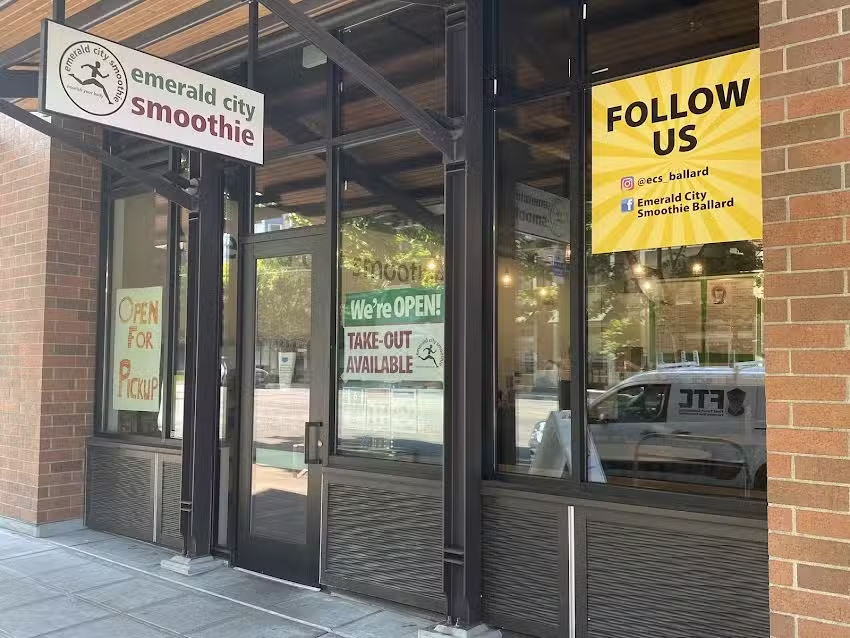
BackThe former Emerald City Smoothie location at 1545 NW Market St in Seattle's Adams neighborhood is now a closed chapter, but its story is one of pronounced highs and significant lows. As a franchise of a well-known Seattle-born chain, this spot aimed to deliver on the brand's promise of fresh, healthy, and nourishing options. For a time, it was a valued destination for many seeking a quick health boost. However, customer experiences were deeply divided, painting a picture of a business that excelled in some areas while critically failing in others. The establishment is now permanently closed, leaving behind a mixed legacy defined by both loyal fans and deeply disappointed patrons.
The Bright Side: Speed, Service, and Standout Smoothies
For many customers, this particular Emerald City Smoothie was a model of efficiency and quality. A recurring theme in positive feedback was the incredibly fast and friendly service. One regular customer noted their order was ready in less than a minute, highlighting the convenience that is paramount for anyone grabbing a quick meal or a post-workout drink. This level of speed, combined with a consistently welcoming staff, made it a favorite location within the broader franchise for some. Patrons felt the employees were exceptionally nice, which elevated the experience beyond a simple transaction and fostered a sense of loyalty to this specific storefront.
The core product, the smoothies themselves, often received high praise. Customers described them as huge, flavorful, and perfectly balanced in sweetness, capable of staving off cravings for hours. Drinks like "The Builder" were singled out as ideal protein shakes, packed with flavor and substance. These beverages weren't just seen as treats but as effective meal replacement smoothies that were both filling and aligned with a healthy lifestyle. For those who loved it, this location was a dependable go-to spot, a reliable part of their self-care routine where they could count on getting a tasty, satisfying, and nutritious product served with a smile.
A Menu Built on Health and Customization
As part of a chain focused on wellness, the menu was designed to cater to a wide range of dietary needs and fitness goals. The brand prides itself on using fresh fruit and high-quality ingredients, offering everything from healthy smoothies to a variety of nutritional supplements and add-ins like whey protein, fat burners, and vitamins. This emphasis on customization allowed customers to tailor their drinks, whether they were looking to bulk up, slim down, or simply get a dose of clean energy. This flexibility was a key part of the appeal, positioning the shop as more than just a place for fresh juice but as a partner in an active, health-conscious lifestyle. The availability of breakfast, lunch, and dinner options further cemented its role as a convenient spot for a nutritious meal at any time of day.
The Downside: Inconsistency and Critical Failures
Despite the glowing reviews from loyalists, a significant portion of customers had experiences that were starkly different. The most damaging feedback pointed to a troubling lack of consistency and severe quality control issues with certain menu items. This inconsistency created a gamble for customers; one day they might receive a perfect smoothie, and the next, a disappointing one.
Watery Smoothies and Bland Flavors
While some raved about the robust flavors, others were left underwhelmed. One of the most pointed critiques came from a customer who tried the "Vegan Dream" on two separate occasions and found it to be the "most bland and poorly made" smoothie they had ever had from the chain. They described the flavor profile as being akin to water with only a faint hint of strawberry. This type of feedback suggests that while popular recipes may have been executed well, specialty or less common orders, like their vegan smoothies, may not have received the same attention to detail, leading to a subpar product that failed to justify its price.
The Açaí Bowl Fiasco
Perhaps the most detailed and damning criticism leveled against this location concerned its acai bowls. One customer, expecting a "hearty acai bowl" that could serve as a meal replacement, was instead served a product they found deeply disappointing on every level. The açaí base was described as "watery and thin with barely any flavor," a critical flaw for an item whose appeal lies in its thick, sorbet-like consistency. The problems didn't stop there. The toppings, which are meant to add texture and nutritional value, were of poor quality. The granola was stale, the chia seeds were "rock-hard," and the banana was cut into "comically thick" slices. Compounding the poor quality was the slow service, making the entire ordeal a frustrating experience.
This customer's review is particularly insightful as it highlights a potential strategic flaw: focusing so heavily on the smoothie side of the business that other menu items become an afterthought. The reviewer even conceded that the smoothies were "actually pretty decent," which reinforces the idea that the shop's quality was siloed. For a health food establishment, failing to deliver on a popular and premium item like an açaí bowl is a major misstep, as customers expect fresh, high-quality ingredients across the entire menu, not just on the flagship products.
A Concluding Look at a Closed Business
The story of the now-shuttered Emerald City Smoothie on NW Market Street is a lesson in the importance of consistency. It successfully built a base of loyal customers who loved its fast service, friendly staff, and flavorful protein shakes. For them, it was a reliable and cherished part of their routine. However, the business struggled to maintain a uniform standard of quality across its offerings. The negative experiences, particularly the bland vegan smoothies and the disastrous acai bowls, reveal a business that couldn't guarantee a positive outcome for every customer, every time. Ultimately, this location leaves behind a legacy of duality—a place that was simultaneously a beloved neighborhood fixture and a source of deep customer frustration, reminding us that in the competitive food service industry, even a strong core product cannot always compensate for weaknesses elsewhere on the menu.