Jamba
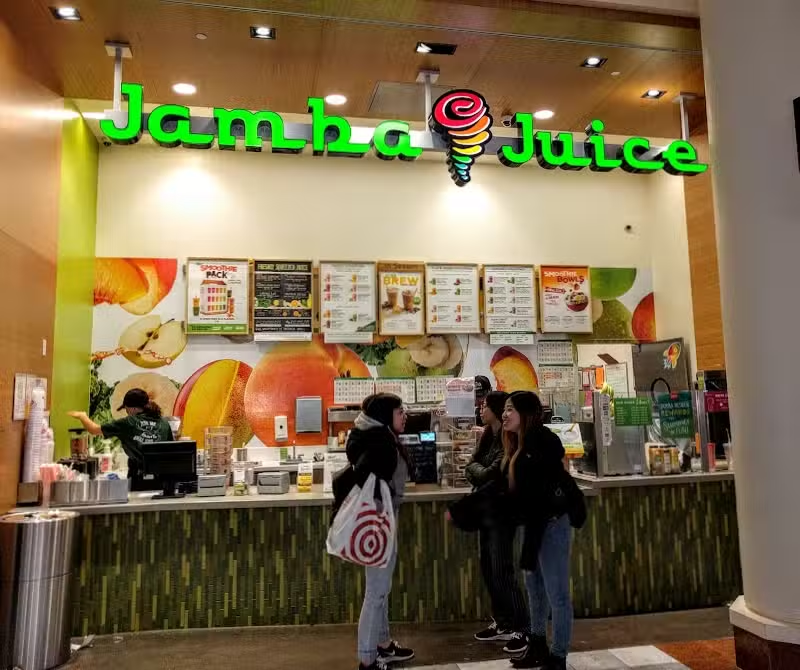
BackThis specific Jamba location, formerly situated at 3251 20th Ave within the Stonestown Galleria shopping center, is now permanently closed. An analysis of its operational history, drawn from customer feedback and its general standing, presents a complex picture of a brand-name juice bar that struggled with consistency. While it delivered on the core promise of flavorful and health-conscious products for some, for many others, the experience was defined by significant service and operational shortcomings that likely contributed to its eventual closure.
The Appeal: Fresh Blends and Healthy Options
At its best, this Jamba franchise embodied the qualities that have made the national chain a go-to destination for those seeking nutritious refreshment. The fundamental appeal was its menu of fruit smoothies and juices, which many patrons found to be both delicious and aligned with a healthy lifestyle. Positive feedback often centered on the quality of the ingredients and the final product. One customer, for instance, specifically praised the "orange fresh" juice, highlighting that it was 100% natural, containing no added sugar or other additives. This sentiment reflects the core value proposition of a modern smoothie shop: providing clean, straightforward, and tasty nutrition on the go.
The menu offered classic favorites that loyal customers returned for. Drinks like the "Mango a Go Go" and "Caribbean Passion" were cited as standout choices, beloved for their slushy texture and vibrant taste. The perception was that the ingredients were genuinely fresh, and the option to add vitamin boosts and other supplements allowed for a customizable wellness experience. For a segment of its clientele, this Jamba was a reliable source for healthy drinks that served as a meal replacement, a post-workout recovery aid, or simply a guilt-free treat. The brand's identity as a colorful, health-focused counter-serve chain was clearly a draw, promising a quick and easy way to consume fruits and nutrients.
Moments of Quality Service
Even amidst broader criticism, there were instances of positive staff interactions that demonstrated the potential for excellent customer service. One detailed account, while largely negative, made a point to commend a specific cashier named Sierra for her great service and pleasant demeanor, noting that she even offered a complimentary boost to compensate for a mistake. These moments, however isolated, suggest that the staff included individuals capable of upholding a high standard of service. When operations ran smoothly and customers were served by engaged and friendly employees, the experience could be very positive, aligning with the upbeat branding of a premier juice bar.
Operational Flaws and Customer Frustrations
Despite its potential, this location was plagued by a series of recurring issues that resulted in an overall mediocre rating of 3.8 stars. These problems spanned from service speed and staff training to questionable business practices, creating an unreliable and often frustrating experience for customers.
Painfully Slow and Inefficient Service
A primary and frequently cited complaint was the extremely slow service. Customers described the process as "painfully slow," a critical failure for a business model that relies on speed and convenience, especially within a bustling mall environment. The issue persisted even for those who tried to bypass the line by ordering online for pickup. Reports indicated that the time estimates provided for online orders were "completely off," defeating the purpose of ordering ahead. This inefficiency suggested a systemic problem with workflow and staffing, as the slowness was noted even when the location appeared to be well-staffed. For a smoothie shop, where speed is a key competitive advantage, such delays were a major deterrent.
Inconsistent Quality and Alarming Hygiene Lapses
Beyond speed, there were serious concerns about the consistency of the product and the professionalism of the staff. One of the most telling reviews detailed a significant quality control failure. A customer ordered a "Peanut Butter Mood" smoothie that was made without any peanut butter. While a simple mistake is forgivable, the staff's response was not. An employee attempted to resolve the issue by pouring the already-sipped-on drink back into a blender to add the missing ingredient. This action is a major violation of health and hygiene standards in the food service industry.
The customer, who had previously worked at Jamba for over a decade, was rightfully appalled, noting that re-blending a used drink was an unheard-of and unacceptable practice. When she requested that the drink be remade from scratch, the employee reportedly reacted with a visible look of annoyance. This incident points to a profound lack of training in both basic food safety protocols and customer recovery skills. It erodes trust and tarnishes the image of a brand centered on health and wellness. If customers cannot trust the preparation of their natural juice and smoothies, the entire business concept is undermined.
Questionable Financial Practices
Perhaps the most serious allegation leveled against this Jamba location involved its billing practices. A review from four years prior claimed the store was charging customers a 5% "ordinance fee" on top of standard city taxes. When questioned, neither the employees nor the managers could provide an explanation for the fee, simply stating it was a new policy. The customer investigated and found no corresponding city ordinance that would justify such a surcharge, leading them to label it a "scam fee." This type of unexplained charge is a massive breach of trust. It suggests a deliberate attempt to mislead customers and extract extra money without transparency. Such a practice would understandably drive away patrons and severely damage the reputation of not just the single franchise, but the Jamba brand as a whole.
A Concluding Retrospective
The story of the now-closed Jamba at Stonestown Galleria is a case study in the importance of operational consistency. While the foundation of a popular brand and a menu of desirable fruit smoothies and fresh juice was in place, this location failed to reliably execute the basics. The positive aspects—delicious and healthy products and occasional friendly service—were overshadowed by slow service, critical training gaps, and highly questionable financial transparency. The accumulation of these negative experiences created a reputation for unreliability that is difficult for any consumer-facing business to overcome. For potential customers of other juice bars, the lessons from this location are clear: a great menu is not enough if it isn't supported by efficient service, well-trained staff, and trustworthy business practices.