Nekter Juice Bar
BackThe business listed as Nekter Juice Bar at 1531 Main St in Redwood City is permanently closed, and for prospective customers, this is likely a good thing. This particular location serves as a cautionary tale about the growing pains of the digital food economy, specifically the rise of delivery-only or "ghost" kitchens. While the Nekter Juice Bar brand is a well-established chain known for its commitment to healthy smoothies and fresh juices, this address was a source of significant confusion, frustration, and ultimately, disappointment for anyone who tried to visit it in person.
Based on a consistent pattern of customer feedback and an extremely low rating of 1.4 stars, the 1531 Main St address did not house a public-facing retail juice shop. Instead of finding a welcoming storefront to order acai bowls or a cold-pressed juice, visitors were directed to what they described as a "sketchy back alleyway." Reports mention a scene devoid of any commercial establishment, populated only by run-down vehicles and trash. This stark reality was a sharp contrast to the professional online presence that suggested a standard, operational juice bar, complete with photos of a clean, modern interior that are typical of the Nekter brand.
The Ghost Kitchen Controversy
The core of the problem lies in the business model. All evidence points to this location operating as a "ghost kitchen," a facility that prepares food and beverages exclusively for delivery. These operations have no dining room, no counter service, and no physical presence for customers. They exist solely as a production hub for orders placed through third-party apps like DoorDash and Grubhub. While this can be an efficient model for businesses looking to expand their delivery footprint without the high overhead of a retail location, it becomes problematic when the nature of the operation is not transparent to the public.
In this case, the Nekter listing on platforms like Google Maps created the expectation of a physical store. Customers, likely searching for a nearby spot to grab a healthy snack, were misled. The frustration is palpable in reviews where users explicitly warn others not to go, calling the listing "fake" and "Doordash spam." This disconnect between the digital storefront and the physical reality is what led to the overwhelmingly negative response. Customers wasted time and fuel trying to find a business that, for all intents and purposes, did not exist for them. The experience highlights a significant pitfall of the ghost kitchen trend: the potential for consumer deception, whether intentional or not.
What Customers Expected vs. What They Found
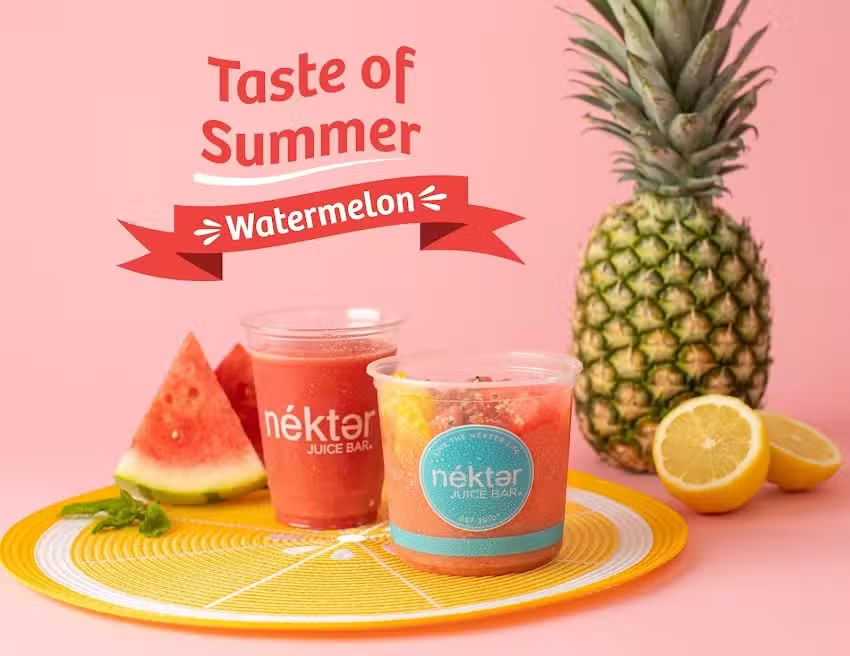
To understand the depth of the disappointment, it's important to know what the Nekter Juice Bar brand represents. Founded in 2010, Nekter has built a reputation as a modern juice bar concept focused on fresh, clean, and nutrient-rich ingredients. Their official marketing emphasizes transparency, promising no hidden fillers, unnecessary sugars, or artificial flavors in their menu of made-to-order juices, smoothies, and bowls. The brand promotes a healthy lifestyle and has expanded to over 200 locations across the United States, cultivating a loyal following.
A customer seeking out this brand would anticipate a bright, welcoming environment where they could customize their order, perhaps trying a sample or asking questions about the natural ingredients. They would expect to find popular items like:
- Acai Bowls: Such as the Acai Banana Berry Bowl or the Acai Peanut Butter Bowl, blended with housemade cashew milk and topped with granola and fresh fruit.
- Smoothies: A wide variety of healthy smoothies made with real fruits and vegetables.
- Fresh Juices: Including options for a juice cleanse or individual bottled juices like "The Glow" or "Toxin Flush."
- Healthy Snacks: Other health-conscious options to complement their drinks.
The experience at 1531 Main St offered none of this. The location failed to deliver not just the product for walk-in customers, but the entire brand experience that Nekter typically provides. It was an address for delivery drivers, not the health-conscious consumer it was supposedly serving.
The Aftermath and Lessons Learned
The permanent closure of this location was the inevitable outcome of its flawed execution. A business model that alienates and frustrates the very customers it aims to attract is unsustainable. The flood of one-star reviews served as a public service announcement, warning others away and likely crippling its ability to generate any positive reputation. This situation underscores the critical importance of clarity in business listings. If a location is delivery-only, it must be explicitly stated to manage customer expectations. Falsely representing a ghost kitchen as a traditional storefront is a breach of trust that, as seen here, can be fatal to a business's reputation.
For consumers, this serves as a reminder to be discerning, especially when exploring new food options on delivery apps. It's often wise to cross-reference a location and read recent reviews before placing an order or attempting to visit. The term "ghost kitchen" itself can be a red flag for some, as these operations can lack the public accountability of a physical restaurant. While many are legitimate and produce high-quality food, the case of the Redwood City Nekter demonstrates the potential for negative experiences when the model is poorly implemented.
while you can no longer attempt to visit the Nekter Juice Bar at 1531 Main St, its story is a valuable one. It was not the vibrant smoothie shop its online presence suggested but a delivery hub that led to a dead end for hopeful customers. Those in the area looking for the authentic Nekter experience will need to consult the company's official store locator for verified, public-facing retail locations where they can actually walk in and enjoy the healthy snacks and drinks the brand is known for.