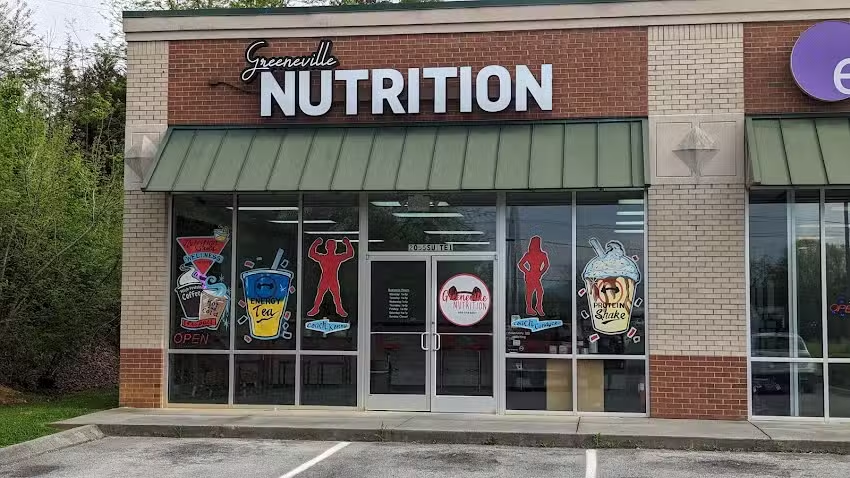
Greeneville Nutrition
BackFormerly located at 235 W Summer St, Greeneville Nutrition was a beverage spot that, before its permanent closure, carved out a specific niche in the local market. With an average rating of 4.6 stars from customer feedback, it was clear that the establishment had a significant following. It positioned itself as a destination for healthy drink options, attracting a clientele focused on wellness and meal alternatives. However, a deeper look into its offerings and customer experiences reveals a more complex picture, with distinct positives and some notable points of concern that likely defined its time in business.
The Appeal: Variety and Service
One of the most consistently praised aspects of Greeneville Nutrition was its vast and colorful menu. Customers frequently mentioned the sheer number of choices available, with creatively named drinks spanning a wide range of flavors. The core offerings revolved around two popular categories: meal replacement shakes and vibrant, energizing beverages known as loaded teas. For many, this was a welcome alternative to traditional fast food, providing what was marketed as a healthier way to get a quick meal or a boost of energy. The menu promised a blend of good taste and function, which resonated with a health-conscious demographic.
First-time visitors, who could easily be overwhelmed by the extensive list of options, often reported positive interactions with the staff. One customer, Alicia Duncan, recounted an experience where a staff member named Leah patiently asked questions to understand her preferences before recommending a tea that she found delicious. This type of personalized service was a significant asset, creating a welcoming environment that encouraged repeat business and helped demystify the complex menu for newcomers. In a landscape where quick-service can often feel impersonal, this focus on customer guidance stood out.
What Were Customers Drinking?
The product line was central to Greeneville Nutrition's identity. Understanding what was in these popular drinks is key to understanding the business itself.
- Meal Replacement Shakes: These were a cornerstone of the menu. Promoted as a full meal in a cup, these protein shakes were popular for breakfast or lunch on the go. Customers like Jeana Hinkle specifically highlighted the shop as a go-to place for something different from typical shakes. They were offered in dozens of flavors, mimicking everything from birthday cake to fruity cereals.
- Loaded Teas: Perhaps the most talked-about item, these energy teas were known for their bright, layered colors and purported benefits like enhanced metabolism and energy. These drinks are typically a cocktail of ingredients, including tea concentrates, caffeine from sources like guarana, B-vitamins, and sugar-free flavorings. While some customers loved the unique blends and the boost they provided, the complexity of the ingredients also led to questions.
Points of Contention and Concern
Despite its popularity, Greeneville Nutrition was not without its criticisms, which touched on both product consistency and the transparency of its business model. These issues offer insight into the challenges the business faced and why some customers approached it with caution.
Inconsistent Quality and Flavor
While many reviews were glowing, not every drink hit the mark for every customer. A review from Jeff McNeese noted that a pineapple drink purchased for his wife reportedly lacked a strong pineapple flavor. While a minor complaint, it points to a potential issue with consistency. When a menu relies on precise combinations of powders and syrups, variations in preparation can lead to a different experience from one visit to the next. For a business built on flavor, ensuring that each drink meets customer expectations is paramount, and occasional lapses could deter repeat visits.
The Underlying Business Model: A Lack of Transparency?
A more significant point of concern is hinted at in a review by Mindy Porter, who advised future customers to "ask questions and make sure you know what your getting in your drinks." This comment sheds light on a common characteristic of businesses with "Nutrition" in their name. These establishments often operate as independent distributors for multi-level marketing (MLM) companies, with Herbalife being the most prominent. These "nutrition clubs" are not typical cafes or restaurants; they are storefronts designed to sell and distribute products from one specific brand.
This model explains several things about Greeneville Nutrition. The immense variety of shake and tea flavors is made possible by combining different flavored supplement powders, not from blending fresh fruits and vegetables as one might find at a traditional fresh juice bar. The drinks, from the healthy smoothies to the detox juices, are constructed from a base of the parent company's products. While this is a legitimate business practice, the lack of explicit branding can be confusing for consumers. Customers walking in might not realize they are consuming products from an MLM company, which can be a point of contention for those who prefer to avoid such business structures or who are seeking whole-food-based nutrition. The advice to "ask questions" suggests that the exact nature and ingredients of the products were not immediately obvious, placing the burden of discovery on the customer.
Final Analysis of a Closed Establishment
In retrospect, Greeneville Nutrition occupied a unique but polarizing space. For its fans, it was a source of delicious, convenient, and seemingly healthy meal options, served with a friendly and personal touch. The extensive menu of protein shakes and colorful loaded teas offered a sense of excitement and endless variety. The community aspect, often fostered by the club-like atmosphere of such establishments, created a loyal customer base.
However, the business also faced challenges related to product consistency and, more fundamentally, the transparency of its operating model. The reliance on pre-made supplement powders rather than fresh ingredients distinguishes it from a conventional juice shop, and the indirect association with an MLM brand could be a deterrent for a segment of potential customers. While now permanently closed, Greeneville Nutrition serves as a case study in a growing trend of nutrition-focused beverage shops. It highlights the appeal of convenient health products while also underscoring the importance of clarity and transparency for modern consumers who increasingly want to know exactly what they are putting into their bodies.