Jamba Juice
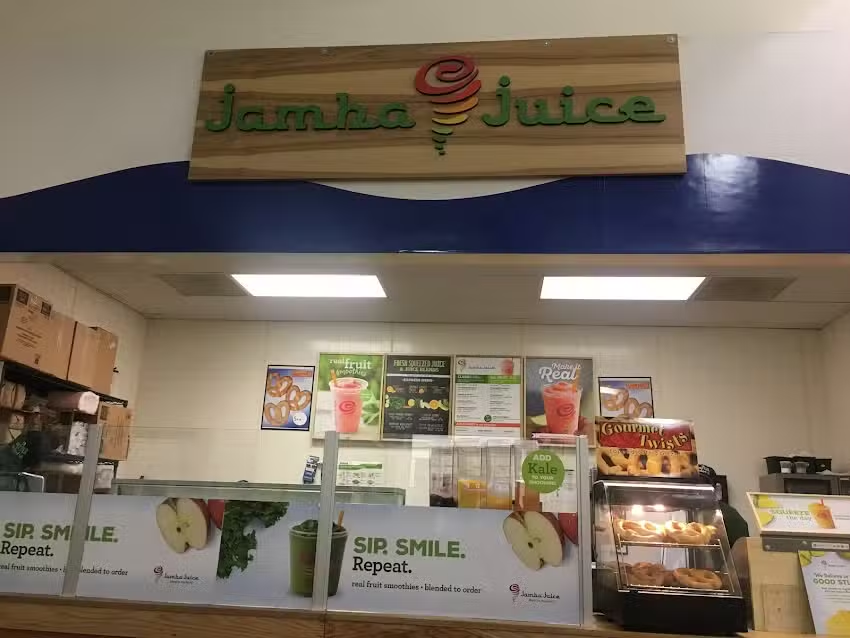
BackThis particular Jamba Juice, formerly located at 240 Fitzgerald Blvd within the Edwards Air Force Base, is now permanently closed. For the time it was operational, it served as a much-welcomed spot for base personnel, offering a quick and convenient option for seemingly healthy beverages. Its presence was a significant amenity for a community with limited off-base access, providing a taste of a popular national brand right where people worked and lived. The general sentiment from patrons was one of appreciation, but this gratitude was often paired with notable critiques that defined the customer experience.
Despite its eventual closure, the establishment maintained a respectable 4-star rating, reflecting a generally positive, albeit imperfect, reception. The core appeal was undoubtedly its product quality and the convenience of its location. For those stationed at Edwards AFB, having a dedicated juice shop on-site was a major perk. Patrons were, as one reviewer described, a "captive audience," and the existence of this Jamba Juice meant they didn't have to venture far for fresh fruit smoothies and other blended drinks. The quality of the smoothies themselves was consistently praised, with customers describing them as "superb" and "amazing," indicating that the core product lived up to the brand's reputation.
Another significant positive was the staff, who were remembered as being "very friendly and attentive." In any service-based business, but especially one in a close-knit community like a military base, positive staff interactions can greatly enhance the customer experience. This friendly service, combined with the high quality of the drinks, formed the foundation of what people liked about this specific location.
The Trade-Offs of an On-Base Operation
However, the convenience and quality came with considerable downsides that were repeatedly mentioned by customers. The most prominent issue was the limited menu. This location operated as a Jamba Juice "express," which meant its offerings were significantly curtailed compared to a standard, standalone store. This lack of variety was the primary reason several reviewers deducted a star from their ratings. Customers looking for the full range of options, including perhaps more complex healthy juices, a wider variety of bowls, or seasonal specials, were often left wanting. This limitation suggests a business model tailored for high-volume, quick-service transactions, prioritizing speed over selection, which may not have satisfied all customer expectations.
The ability to get a custom drink, as one patron noted by ordering a blend of kale, carrot, and ginger, showed some flexibility. This willingness to go off-menu was a positive counterpoint to the otherwise restrictive selection. However, it didn't fully compensate for the absence of a full menu, which would have included a broader array of natural ingredients and combinations, such as the popular acai bowls or various cold-pressed juice options found at other locations.
Pricing and Lack of Rewards Integration
Price was another point of contention. One customer explicitly described the establishment as "very expensive," citing a cost of over $20 for four drinks. While pricing for a national franchise is often standardized, locations in captive-audience environments can sometimes command higher prices. This costliness, paired with the limited menu, created a value proposition that some found lacking. Customers were paying a premium but not receiving the full brand experience.
Compounding the financial aspect was the store's exclusion from the national Jamba rewards program. For loyal customers of the brand, the inability to earn or redeem points at this location was a significant drawback. It disconnected this branch from the broader Jamba ecosystem and removed an incentive for repeat business. To its credit, the store did implement its own loyalty system in the form of a punch card, offering a free drink after ten purchases. While this was a reasonable substitute, it still fell short of the integrated digital rewards system that modern consumers have come to expect, further highlighting the location's operational independence and its limitations.
A Niche Service with Inherent Limitations
Ultimately, the story of the Jamba Juice at Edwards AFB is one of a valued service that operated under a set of unique constraints. It successfully filled a niche, providing quality healthy drinks and friendly service to the base community. It was a place where one could get a reliable smoothie from a trusted brand without leaving the base.
However, its operational model as an "express" location created a compromised experience. The combination of a limited menu, high prices, and the lack of integration with the corporate rewards program were persistent issues for customers. While appreciated for its convenience, this smoothie shop didn't deliver the complete value and variety that the Jamba brand typically represents. Its permanent closure leaves a void for those on base who relied on it, but it also serves as a case study in the challenges of operating a franchise in a specialized, isolated environment. The balance between convenience and a complete customer experience is a delicate one, and in this case, the limitations may have ultimately overshadowed the benefits.