
Clean Juice
BackThe Clean Juice location at 3919 Washington Road in McMurray is now permanently closed. For a period, it served the community as a destination for USDA-certified organic products, positioning itself as a premium juice bar. However, an analysis of its operations through customer feedback and broader company context reveals a complex picture of a business that, while appealing to a health-conscious demographic, struggled with fundamental issues of value, consistency, and execution that likely contributed to its eventual closure.
The Promise of a Healthy Alternative
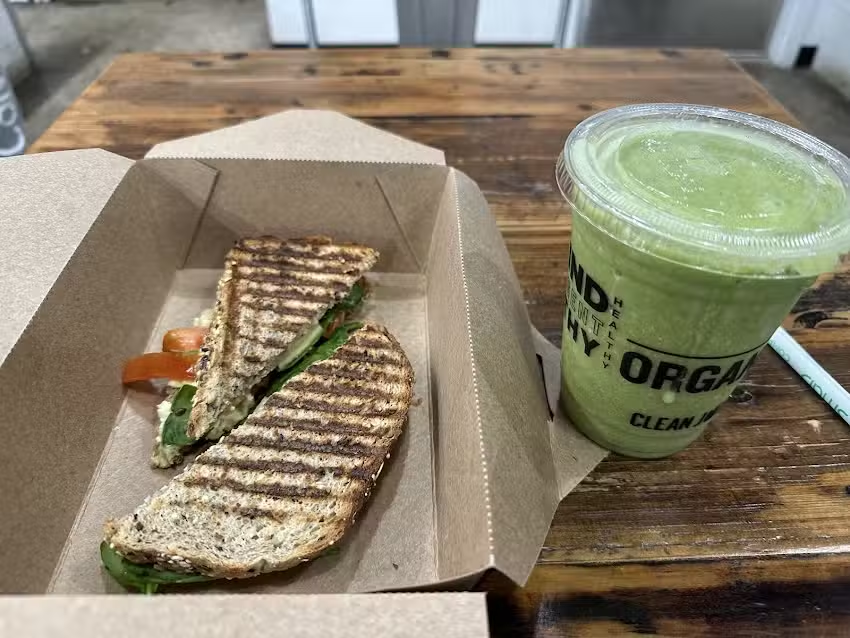
Clean Juice entered the market with a powerful and appealing proposition: providing genuinely healthy, organic, and accessible food and drinks. As a franchise, its brand was built on a foundation of high-quality ingredients and a commitment to wellness. The menu at the McMurray location reflected this, offering a wide array of organic juices and smoothies, wraps, sandwiches, and popular acai bowls. For many customers, it was a welcome addition, offering unique ingredients like spirulina, goji berries, and wheatgrass that were not commonly found in other local eateries. Positive experiences often highlighted the quality and taste of the products. Patrons praised specific items like the Cali Wrap, available with a gluten-free option, and the berry bowl, which was described as a filling and satisfying meal that helped customers avoid unhealthy alternatives. The convenience of an app-based ordering system was also noted as a modern and efficient touch.
Furthermore, some of the most glowing reviews centered on the customer service. Employees were described by some as exceptionally friendly, happy, and welcoming. One customer specifically mentioned an employee named Elijah, who was not only helpful in explaining ingredients but also offered personalized recommendations. These instances suggest that, at its best, the McMurray Clean Juice could deliver a positive and personal experience that aligned with its wholesome brand image.
The High Cost of Cleanliness
Despite the positive aspects, a significant and recurring theme among dissatisfied customers was the price. The business operated at a moderate price level, but for many, the cost did not align with the perceived value. The most pointed criticism came from a customer who paid $11 for what they described as a "tiny, deflated, completely skimping and sad excuse for a wrap." This sentiment of being "ripped off" is a powerful one and indicates a major disconnect between what customers expected and what they received. While organic ingredients inherently carry a higher cost, the portion sizes at this location seemingly failed to justify the premium price for some patrons, leading them to recommend competitors like Panera or Zoup instead.
This issue is not unique to the McMurray location. Across the country, the Clean Juice franchise model has faced scrutiny over its pricing and profitability. Rising costs for food and labor have squeezed franchisee margins, and reports from 2023 indicated that a significant percentage of store owners were losing money, with some taking legal action against the parent company. The brand's shift from in-house cold-pressed juices to pre-bottled options was a controversial decision that further impacted profitability and altered a key component of the original business model that many franchisees had invested in.
Inconsistencies in Service and Operations
Perhaps more damaging than the pricing complaints were the inconsistencies in the customer experience. For every review praising the friendly staff, there was another describing the team as "off and on." This variability suggests potential issues with management, training, or employee morale. An establishment, especially a franchise, relies on predictability and consistent standards to build trust, and this location appeared to falter in that regard.
Operational reliability was another area of concern. Customers reported that equipment, such as blenders, was sometimes out of service. The store also experienced stock shortages, being out of key ingredients for its menu items. While supply chain issues can affect any business, these problems, when frequent, disrupt the customer experience and erode confidence. For a smoothie shop, having non-functional blenders is a critical failure. These operational hiccups, combined with a drab ambiance that one customer felt lacked the typical "health nut vibe," painted a picture of a business that may have been struggling behind the scenes.
A Contradiction in Terms: The "Clean" Issue
For a business with "Clean" in its name, any lapse in hygiene is particularly detrimental. One of the most severe criticisms leveled against the McMurray location was from a customer who found a hair in their product. The reviewer pointedly questioned why employees were not wearing hairnets, especially given the premium prices and the brand's core identity. This type of incident directly undermines the trust the company aims to build. It transforms the brand name from a promise into a point of irony, leaving a lasting negative impression that is difficult to overcome.
A Broader Franchise in Turmoil
The closure of the McMurray store should be viewed within the larger context of the Clean Juice franchise's systemic struggles. In late 2022 and 2023, the company faced a franchisee exodus, with nearly 40% of its locations either closing or planning to close. Franchisees cited numerous issues, including the damaging switch to pre-bottled juices, misuse of brand funds, accounting discrepancies, and cripplingly low profitability. More recently, in 2024, the company was sold to Brix Holdings, the owner of Friendly's, after facing severe supply chain disruptions that left stores unable to get the very juices central to their name. These corporate-level problems create an environment where individual stores, like the one in McMurray, face an uphill battle for survival.
In retrospect, the story of the McMurray Clean Juice is one of unfulfilled potential. It offered a menu of freshly made juices and healthy foods that catered to a growing market demand. At times, it succeeded in providing delicious products and excellent service. However, it was ultimately weighed down by a combination of local and corporate challenges. The customer feedback of inconsistent service, questionable value for money, and critical failures in hygiene and operations, mirrored the broader instability of the franchise. While it once provided a source for a juice cleanse or a healthy lunch, its permanent closure serves as a case study in how even a strong concept can fail when the execution does not consistently meet the brand's promise or the customer's expectations.