
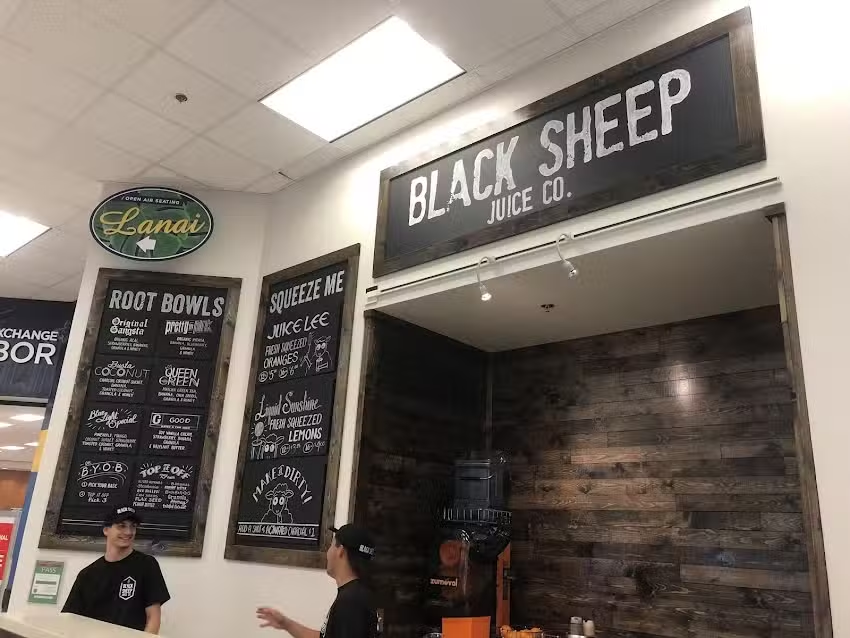
Black Sheep Juice Co
BackPermanently closed, Black Sheep Juice Co. was an establishment that presented a complex and often contradictory experience to its patrons. Located within the NEX Food Court at Naval Station Pearl Harbor in Honolulu, its name suggested a dedicated juice bar, but in practice, its menu was far more expansive, venturing deep into the territory of a deli and ice cream parlor. This broad offering was both a source of its appeal and, according to customer feedback, a root cause of significant operational challenges that ultimately defined its legacy.
The business cultivated a following for specific items that consistently hit the mark. Several customers lauded its ice cream, describing it as "rich and creamy," a standout treat that warranted repeat visits. For some, Black Sheep was a welcome alternative to the typical food court fare, offering what were perceived as healthier options. Patrons praised its selection of spinach wraps and healthy smoothies, positioning it as a go-to spot for a lighter meal. Positive experiences were not limited to the food; the staff was commended on at least one occasion for being "super nice," contributing to a pleasant and welcoming atmosphere. The sandwiches also received accolades, with items like the "Belly Up" and "Bootlegger" being described as great-tasting and reasonably priced, leaving customers full and satisfied. These moments of success painted a picture of a promising eatery that understood how to craft appealing, flavorful products.
A Pattern of Inconsistency
Despite these positive highlights, a significant portion of customer experiences tells a different story—one marred by alarming inconsistency and serious failures in quality control. The disparity between a satisfying meal and a deeply disappointing one appears to have been a frequent issue. A prime example was "The Rascal" wrap, which, while allegedly containing roasted chicken, was described by one customer as being almost entirely lettuce. While the patron complimented the freshness and quality of the greens, the core protein component was virtually absent, transforming a promised hearty wrap into little more than a leafy snack. This type of inconsistency in preparation and portioning suggests a lack of standardized procedures in the kitchen, leading to a product that failed to meet customer expectations and deliver on value.
Severe Food Safety Concerns
More troubling than inconsistent recipes were the repeated and severe accusations regarding food safety and freshness. Multiple reviews detailed stomach-turning discoveries that pointed to systemic issues with food handling and inventory management. One of the most severe complaints cited finding "moldy olives and chicken" in an order. The same customer noted a lack of on-duty management to address the critical issue, raising questions about accountability and oversight within the establishment. This wasn't an isolated incident. Another patron reported a similarly distressing experience with the "Fresh off the Boat" salad. They described the chicken as discolored, slimy, and emitting a fishy smell—all clear indicators of spoilage. The complaint extended to the other ingredients, noting that the cilantro and carrots had brown spots and the lettuce was wilted. This customer’s resolve to check their food meticulously before leaving on any potential future visit underscores a complete breakdown of trust.
These reports are not merely about a meal being subpar; they are about public health. For any establishment, but especially one serving items marketed as fresh, like salads and potential fresh juices, the failure to ensure the wholesomeness of ingredients is a critical flaw. The presence of spoiled proteins and moldy vegetables suggests significant gaps in proper food storage, temperature control, and the fundamental practice of dating and rotating stock. Such failures can have serious consequences and are a clear betrayal of the customer's expectation of safety.
More Than Just a Smoothie Shop
The business's identity as "Black Sheep Juice Co." likely created a specific expectation in the minds of customers—one centered on beverages like cold-pressed juice and freshly blended smoothies. While smoothies were on the menu and were generally well-regarded, the core of the business, as reflected in customer feedback, was its solid foods: sandwiches, wraps, salads, and ice cream. This diverse menu, while ambitious, may have stretched the kitchen's capabilities too thin. Excelling at creating a perfect smoothie shop atmosphere with consistent, high-quality drinks is one challenge; simultaneously managing the complexities of a full deli counter with multiple fresh ingredients is another. The operational difficulties seemed to stem from this broader focus. The very issues that plagued the salads and wraps—ingredient freshness, proper storage, and consistency—are magnified in a business that tries to do everything at once. The positive reviews for the ice cream and certain sandwiches suggest that when the process was simpler or the ingredients less perishable, the staff could deliver a quality product. However, the more complex and perishable the item, the higher the risk of failure became, a risk that was too often realized.
A Retrospective
Ultimately, the story of Black Sheep Juice Co. is a cautionary tale. It illustrates that good intentions and a few popular items are not enough to sustain a business when fundamental operational standards are not met. The establishment showed flashes of potential, offering a valued alternative in its location and delighting customers with certain menu items. However, the recurring and severe problems with food quality and safety created a deeply negative counter-narrative from which it could not recover. The mixed ratings, averaging around 3.4 to 3.6 stars, accurately reflect this duality of a business that could be both satisfying and dangerously disappointing. The permanent closure of this establishment serves as a final verdict, underscoring that for any food business, consistency, quality control, and above all, a steadfast commitment to food safety are the most critical ingredients for success.