
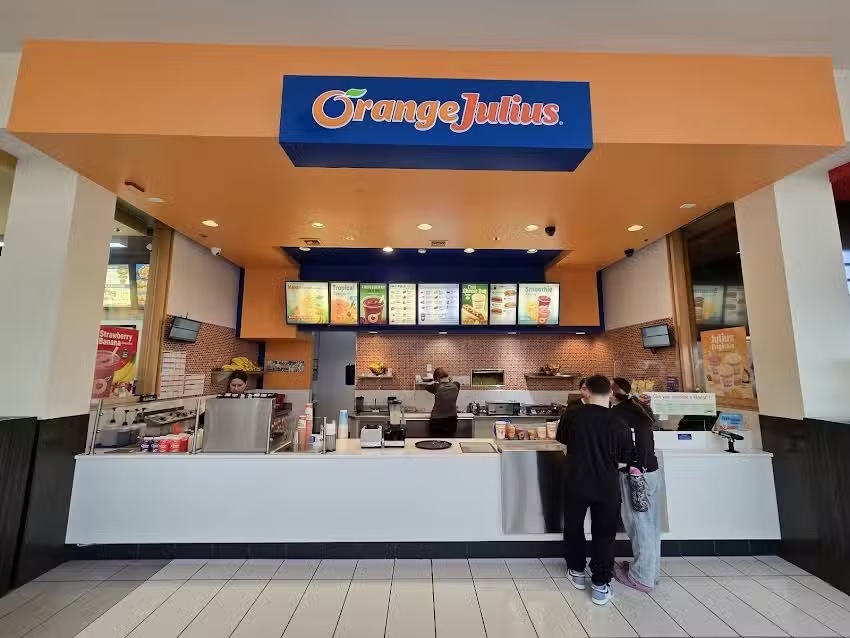
Orange Julius
BackThe Orange Julius location at Vancouver Mall, now noted as permanently closed, represents a case study in the challenges of maintaining brand consistency and customer satisfaction in a competitive fast-food environment. For decades, the Orange Julius name has been synonymous with a unique, frothy, blended fruit drink, a nostalgic treat for many mall-goers. This particular franchise, however, leaves behind a complicated legacy, marked by a starkly divided set of customer experiences that ultimately paint a picture of a business struggling with fundamental operational issues.
An analysis of its performance reveals a pattern of inconsistency that likely contributed to its eventual closure. The core of any juice bar or beverage counter is the quality and reliability of its product. Here, the Vancouver Mall location faltered significantly. Multiple customer accounts describe drinks, particularly the signature Orange Julius, as being "watery" and lacking the distinct flavor profile the brand is known for. One patron noted their drink was so disappointing they discarded it immediately after the first sip. Another received a smoothie that was inexplicably warm. These are not minor grievances; they strike at the very reason for the business's existence. Customers seeking a cold, refreshing beverage were instead met with subpar products that failed to meet even the most basic expectations of a smoothie shop.
Service and Quality Control Issues
Beyond the product itself, the customer service experience was a significant point of contention for many. A recurring theme in negative feedback is the staff's unwillingness or inability to rectify errors. For instance, when a customer received a watery drink and requested a refund, they were flatly denied. In another bizarre incident, a patron who ordered a medium-sized drink and found it to be thin and juice-like was told by staff that only the large size was made to be thicker. This explanation is not only illogical from a customer's perspective but also suggests a profound breakdown in training and standardized recipe adherence. It creates an environment where the customer is penalized for the business's own internal inconsistencies.
Further evidence of systemic problems comes from an account of two teenage employees left to manage the store without apparent supervision. When they admittedly made an order incorrectly, they refused to remake it, citing concerns over "a waste of product." This incident is particularly revealing, as it highlights a failure in management to empower employees to prioritize customer satisfaction. A successful food service operation understands that the small cost of remaking a drink is a crucial investment in retaining a customer's loyalty and goodwill. When staff are more concerned with product waste than with serving a spoiled-tasting drink, it signals a deep-seated cultural problem within the franchise's management.
The Positive Side of the Counter
However, it would be inaccurate to portray the experience at this Orange Julius as universally negative. The business did manage to earn praise from some customers, which makes its overall performance even more perplexing. Some patrons reported that their service was quite fast, a key benefit for shoppers looking for a quick refreshment. The staff, described by some as rude and blunt, were seen by others as approachable and helpful. This dichotomy suggests that the customer's experience was highly dependent on which staff members were on duty, pointing again to a lack of consistent training and operational standards.
One of the more positive aspects highlighted was the staff's flexibility with certain orders. A customer commended the employees for customizing a chili dog for their child, an act of accommodation that was greatly appreciated. This willingness to go slightly off-menu indicates that, at least on some occasions, the staff were capable of providing positive and personalized service. These moments of success stand in stark contrast to the rigid and unhelpful responses other customers received, painting a picture of a business that could be effective but often was not.
A Legacy of Inconsistency
Ultimately, the story of the Vancouver Mall Orange Julius is one of unrealized potential. The brand itself, now largely absorbed into its parent company Dairy Queen since the acquisition in 1987, carries a legacy of being a mall staple. It specialized in blended fruit drinks and what many considered to be a healthier alternative to sodas. Yet, this specific location struggled to live up to that legacy. The final rating of 3.3 stars, based on a relatively small sample of 48 reviews, reflects the deep divisions in customer opinion. While some found a decent, quick snack, a significant number of others encountered poor product quality, questionable value for money (such as extra-large cups not being filled to the top), and frustratingly poor customer service.
The permanent closure of this juice bar serves as a practical lesson in business management. In the food and beverage industry, consistency is paramount. A customer should be able to expect the same quality of fruit smoothies and service on a Tuesday afternoon as they would on a busy Saturday. When a business delivers a positive experience for one person and a deeply negative one for the next, it erodes trust and damages its reputation. The litany of complaints regarding watery drinks, warm smoothies, unfilled cups, and inflexible service policies points not to isolated bad days, but to a persistent failure to maintain quality control and instill a customer-first ethos. For former patrons and potential customers, the closure is the final word on a business that, for many, simply failed to deliver on its promise of a simple, refreshing treat.