Smoothie King
BackFor a period, the Smoothie King located at 8922 Frankford Avenue in Philadelphia was a notable destination for residents seeking quick, health-oriented beverages and snacks. As a franchise of a well-established national brand, it brought a specific vision of wellness to the neighborhood, centered on the company's long-standing mission to "inspire people to live a healthy and active lifestyle." However, this specific location is now permanently closed, leaving behind a mixed legacy of exceptional service and occasional, yet significant, inconsistency. An examination of its time in operation reveals a business that, at its peak, excelled in customer satisfaction but also struggled with maintaining uniform quality.
A Tale of Two Experiences: Service and Quality
The defining characteristic of this former juice bar was the duality of the customer experience. On one hand, a significant portion of patrons reported overwhelmingly positive interactions, frequently citing the staff as a primary reason for their loyalty. Employees were often described as helpful, friendly, patient, and knowledgeable. Specific team members, such as Alyssa S. and Ryan, were personally named in reviews for providing great service that made customers feel recognized and valued. This level of personalized, positive engagement is a critical asset for any food service establishment, transforming a simple transaction into a pleasant and memorable part of a customer's day. The atmosphere was consistently praised as clean, inviting, and organized, which aligns perfectly with the expectations for a health-focused brand like Smoothie King.
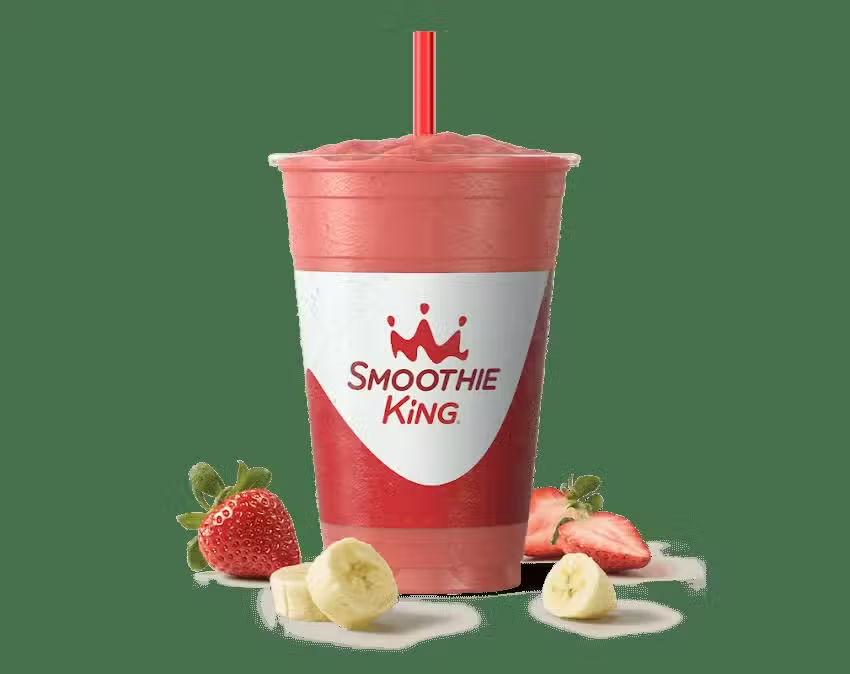
Customers who had positive experiences lauded the product as well. Smoothies were called "delicious" and "wonderful," with first-time visitors often expressing a desire to return and explore more of the extensive menu. The sheer variety of options was seen as a major strength, with one patron noting the choices were "endless." This location successfully positioned itself as a convenient stop for a post-workout drink, attracting clientele from nearby fitness centers who appreciated the targeted nutritional offerings. These patrons found the smoothies to be made "just right," fulfilling their purpose as a refreshing and replenishing beverage.
On the other hand, a starkly different narrative emerges from other customer feedback. One detailed account highlights severe issues with product consistency, pointing to a fundamental operational flaw. A regular customer described ordering a familiar "slim-n-trim" smoothie and receiving a drink that was poorly balanced, tasting overwhelmingly of greens. When the staff attempted to remake it, the flavor swung to the opposite extreme, becoming overpoweringly gingery and ultimately unusable. A second visit resulted in another failure, this time with a Greek yogurt-based smoothie that was so improperly blended it contained large chunks of ice and pineapple, rendering it impossible to drink through a straw. The customer had to take the product home and re-blend it, a significant inconvenience that undermines the very purpose of a quick-service restaurant.
This negative experience, centered around the same employee in both instances, suggests a potential gap in training or a lack of adherence to standardized recipes. For a franchise model that relies heavily on consistency across all locations, such lapses can be incredibly damaging. While the majority of recorded feedback was positive, this detailed negative review exposes a critical vulnerability: the customer's experience was highly dependent on which staff member was preparing their order. This inconsistency ultimately creates an unreliable product, which can erode trust and drive away even loyal customers who value the brand's offerings.
The Smoothie King Menu: A Purpose-Driven Approach
To understand what this location offered, it's important to look at the broader Smoothie King brand, which was founded in 1973 with a focus on creating purpose-driven smoothies. The menu wasn't just about taste; it was designed to meet specific health and lifestyle goals, a concept that can be overwhelming for new customers but is a major draw for its target audience. The offerings were typically segmented into distinct categories:
- Get Fit Blends: These were rich in protein and designed for athletic recovery or muscle building. Options like the popular "Gladiator" or "The Hulk" were essentially protein shakes disguised as delicious smoothies, intended to be consumed after a workout.
- Manage Weight Blends: With controlled calorie counts (often under 350 calories for a 20oz serving), these smoothies were crafted as meal replacement smoothies. The "Slim-N-Trim" and "Keto Champ" lines catered to customers focused on weight management, offering a satisfying yet low-calorie option.
- Be Well Blends: This category focused on overall wellness, featuring ingredients rich in vitamins and antioxidants. Blends like the "Daily Warrior" or "Immune Builder" were packed with fruits and vegetables, often supplemented with enhancers like multivitamins or probiotics.
- Enjoy a Treat Blends: For those seeking a healthier indulgence, this line offered classic, dessert-like flavors such as "Angel Food" and "Banana Boat" but made with whole fruits and without artificial additives.
A key feature of the brand is its "Clean Blends" promise, which assures customers that smoothies are made with whole fruits and organic vegetables, and without artificial preservatives, flavors, or colors. The brand also maintains a lengthy "No-No List" of ingredients it pledges to avoid. Furthermore, the high degree of customization available, from adding extra protein to including immune support or energy enhancers, allowed customers to tailor their healthy smoothies to their exact needs. This extensive and purposeful menu was the core of the business's appeal, offering more than just a generic fruit smoothies experience.
of the Frankford Avenue Location
The story of the now-closed Smoothie King on Frankford Avenue is one of unfulfilled potential. It clearly had the components for success: a strong brand with a dedicated following, a prime location for its target demographic, and, for the most part, a team that could deliver excellent customer service. The numerous five-star reviews demonstrate that when operations were running smoothly, it was a highly regarded establishment that met and exceeded customer expectations. It provided a welcoming environment where people could get a reliable and tasty health product.
However, the documented instances of poor quality control reveal a critical operational weakness. The inability to deliver a consistent product on every visit is a significant failure for any food business, especially a franchise. It suggests that while some employees were excelling, others may not have received the proper training or oversight needed to maintain the brand's standards. This inconsistency is what likely created a ceiling for its success and may have contributed to its eventual closure. For every five customers who left happy, one who had to re-blend their smoothie at home could cause disproportionate damage through negative word-of-mouth.
while this Smoothie King location is no longer in business, its history serves as a valuable case study. It highlights that a friendly staff and a clean environment are vital, but they cannot fully compensate for a product that is unreliable. Patrons seeking a fresh juice or smoothie in the area must now look elsewhere, leaving a void for the many customers who once sang its praises, while also serving as a reminder of the importance of consistency for those who were left disappointed.