The Local Juice
BackFor a time, The Local Juice at 539 South Street was a notable destination in Hyannis for those seeking vibrant, health-conscious fare. With a focus on high-quality, fresh ingredients, it carved out a niche for itself, becoming a go-to spot for many residents and visitors. However, the establishment is now permanently closed, leaving behind a story of both considerable success and notable shortcomings. This retrospective look examines what made The Local Juice a beloved spot and the potential factors, reflected in customer experiences, that may have contributed to its eventual closure.
The Heart of the Business: Juices, Smoothies, and Bowls
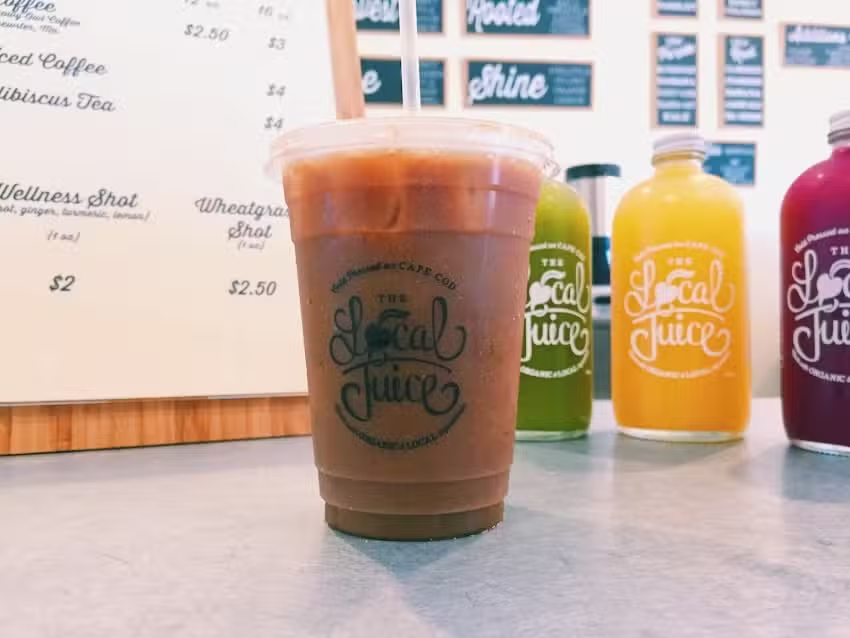
At its core, The Local Juice excelled in its primary offerings. The menu was built around an appealing selection of healthy smoothies, cold-pressed juice, and picturesque acai bowls that consistently drew praise. Customers frequently described their drinks as delicious and refreshing, often highlighting the perceived quality and freshness of the ingredients. One patron memorably dubbed the establishment their "juicy saviours," feeling it was a "home away from home"—a testament to both the product and the welcoming atmosphere the shop cultivated.
Specific menu items became fan favorites and generated significant positive buzz. The "Violette" smoothie was singled out as exceptionally delicious, prepared with visibly high-quality components right in front of customers. Other popular choices included the "yellow smoothie" and a well-regarded avocado toast, which helped solidify its reputation as a reliable spot for a quick and nutritious meal. The açaí bowls were another major draw, celebrated for being loaded with genuinely fresh fruit. This commitment to quality extended to other offerings as well, such as their well-received cold brew coffee, demonstrating a capacity to deliver a premium cafe experience.
A Foundation in Health and Local Sourcing
The business was founded in 2014 by Jen Villa and registered dietician Nicole Cormier, initially selling bottled juices at local farmers' markets before opening their brick-and-mortar location in 2016. Their mission was to promote a nutritious lifestyle, emphasizing locally sourced produce and mindful consumption. This philosophy resonated deeply with a health-aware clientele. The founders positioned their juices not as part of a fad cleanse but as a sustainable way to absorb essential vitamins and minerals, using a cold-press method to maximize nutritional value and flavor. This dedication to wellness was a powerful part of their brand identity and a key reason for their initial popularity.
Cracks in the Foundation: Inconsistency and Food Woes
Despite the widespread acclaim for its beverages, The Local Juice struggled in other areas, revealing operational weaknesses that soured the experience for some patrons. The most significant issue reported was a lack of consistency. One customer noted a starkly different experience across multiple visits: a first smoothie was excellent, a second tasted different, and a third order resulted in two smoothies that were disappointingly watery and juice-like. For a premium-priced juice bar, this inability to deliver the same quality product every time is a serious flaw that can quickly erode customer trust.
The Food Menu: A Point of Contention
While the drinks were the star of the show, the expansion into solid food items appeared to be a critical misstep. Multiple reviews pointed to a significant drop in quality and value when it came to the food menu. A $12 rice bowl was described as particularly poor value, consisting of little more than rice, a couple of pieces of tofu, a few shreds of carrot, and an overabundance of green onions. The sentiment was that the dish lacked substance and creativity, failing to meet the expectations set by the shop's vibrant juices and bowls. Another customer shared a similarly negative experience with a brownie, calling it an "oily saggy mess" that was ultimately inedible. These pointed criticisms suggest that the culinary skill and quality control applied to the beverage program did not extend to their food offerings. This disparity created a frustrating experience for customers who loved the juices but were let down by the food, with one directly pleading for the business to "do better with the food."
Price vs. Value
The premium ingredients and local sourcing commanded a higher price point, with a 16 oz. bottle of juice costing $12 back in 2015. While many customers were willing to pay for high-quality organic juice bar products, the value proposition became questionable when the quality was inconsistent or when other menu items, like the aforementioned rice bowl, failed to justify their cost. This pricing pressure, combined with inconsistent execution, likely made it difficult to retain customers who may have felt their money was better spent elsewhere.
The Final Chapter
The permanent closure of The Local Juice marks the end of a chapter for a business that showed immense promise. It successfully tapped into the demand for healthy options and built a strong initial following based on a foundation of fresh, high-quality drinks. It was, for many, a beloved local spot that delivered on its promise of delicious, nutrient-packed refreshment. However, the business's story also serves as a cautionary tale. The struggles with product consistency and a flawed food menu highlight the challenges of scaling a specialized concept. In the competitive food and beverage industry, excellence in one area cannot always compensate for significant weaknesses in another. While the exact reasons for its closure are not public, the mixed customer feedback provides a clear picture of a business that, while great in some respects, ultimately failed to maintain the high standards across its entire operation that its premium branding promised.