JP Juice and Pan Bar
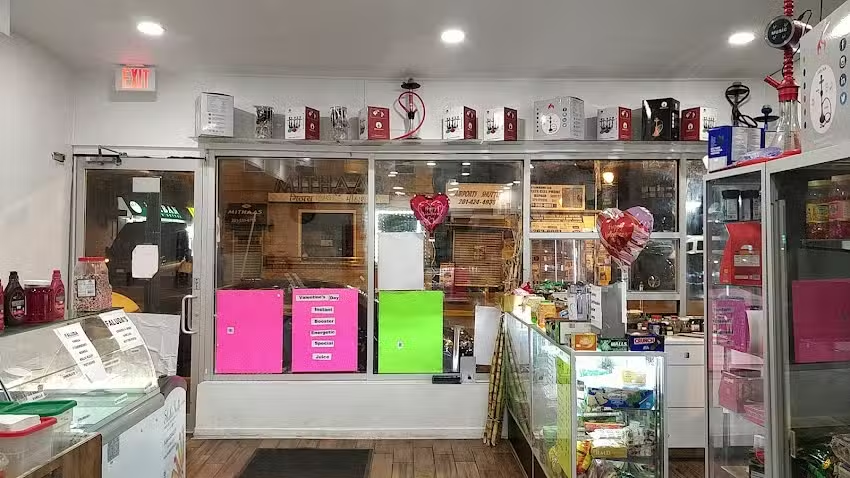
BackLocated at 796 Newark Avenue in the dense and competitive food landscape of Jersey City's Journal Square, JP Juice and Pan Bar presented itself as a hybrid establishment aiming to capture two distinct culinary cravings: the quest for healthy, fresh beverages and the love for authentic Indian street food. However, for those looking to visit, it's crucial to note that this establishment is now permanently closed. The story of its time in operation, gleaned from customer experiences, is one of stark contrasts, showcasing moments of celebrated authenticity alongside significant and repeated failures in quality and hygiene.
The Celebrated Specialty: Authentic Pani Puri
For a segment of its clientele, JP Juice and Pan Bar was not primarily a juice shop but a destination for one of India's most beloved street snacks: pani puri. Patrons who came for this specific item often left with high praise, with some calling it the best they had tasted in the entire Journal Square area, a neighborhood renowned for its Indian cuisine. The experience was described as reminiscent of an authentic street vendor in India. The business served the crispy shells from a counter, filling them one by one for waiting customers.
What set their pani puri apart was the variety, reportedly offering around five different flavors of the spiced water ("pani"), including a popular mint version and a non-spicy jeera (cumin) option. This dedication to providing an authentic, interactive street-food experience was a clear strength and a significant draw. Adding to this positive image, customers also noted other pleasant surprises, such as delicious Turkish baklava and the staff's willingness to offer free samples, which created a friendly, welcoming atmosphere despite the no-frills, "hole-in-the-wall" setting.
A Tale of Two Halves: The Failure of the Juice Bar
Ironically, for an establishment with "Juice" in its name, the beverage side of the business appears to have been its undoing. The contrast between the praised pani puri and the condemned juices is jarring. A multitude of reviews paint a grim picture of the core product, citing severe issues with freshness and preparation that undermine the very concept of a healthy drinks establishment.
Quality Control and Freshness Issues
The most frequent and damaging complaints revolved around the quality of the natural ingredients used. Several customers reported receiving products that were unequivocally spoiled. One review detailed an experience with fresh coconuts that were assured to be tender and fresh but were instead brown, with smelly, undrinkable water. This wasn't an isolated incident. Another patron described ordering carrot juice that tasted "rotten" and disgusting, leading to a deeply unpleasant experience that ended in vomiting—a serious accusation that raises questions about food safety standards.
The preparation of the drinks also came under heavy fire. A customer who purchased an $8 pineapple juice, a premium price for a simple fresh juice, found it was improperly strained and contained bits of pineapple skin. This level of carelessness suggests a fundamental lack of attention to detail. For a business positioning itself as a juice shop, failing to properly prepare and serve a fresh, clean, and palatable juice is a critical misstep.
Hygiene and Ambiance Concerns
Beyond the products themselves, the physical environment of JP Juice and Pan Bar was another source of major concern for some visitors. Descriptions of the interior include a persistent bad smell ("stinked like crazy") and broken tables. While a "hole-in-the-wall" can be charming, it cannot come at the expense of basic cleanliness. These reports suggest an environment that was not just unappealing but potentially unsanitary, a fatal flaw for any food service business, especially one centered on raw produce and cold-pressed juice concepts.
The Contradiction of Value and Experience
With a low price level, JP Juice and Pan Bar should have appealed to budget-conscious consumers. However, the poor quality rendered the low prices irrelevant for many. Customers felt they had "wasted" their money, with one spending $20 on drinks they could not enjoy. The $8 pineapple juice, in particular, highlights this issue: it's not the price itself that's the problem, but the complete failure to deliver a product worthy of that price. This created a perception of being a poor value despite the inexpensive menu.
The business existed as a paradox. On one hand, it was a cherished spot for a specific, well-executed Indian snack that transported some customers back to the streets of India. On the other, it was a failing juice shop that served potentially unsafe, poorly made beverages in an unhygienic setting. This inconsistency likely proved unsustainable. While the specialty pani puri built a small, appreciative following, the fundamental failure to deliver on the "juice" promise, which was half of its identity, generated overwhelmingly negative experiences that tarnished its overall reputation.
A Closed Chapter on Newark Avenue
JP Juice and Pan Bar is now permanently closed, and its story serves as a cautionary tale for aspiring food entrepreneurs. It demonstrates that excelling in one niche product is not enough to sustain a business if the core, advertised offerings are neglected. For a juice shop, the promise of freshness is absolute. The use of high-quality, fresh, and possibly organic juice ingredients, coupled with meticulous preparation and a clean environment, are non-negotiable foundations. JP Juice and Pan Bar, despite its success with pani puri, ultimately could not overcome its critical failures in its primary beverage category, leaving behind a mixed legacy of culinary delight and profound disappointment.